
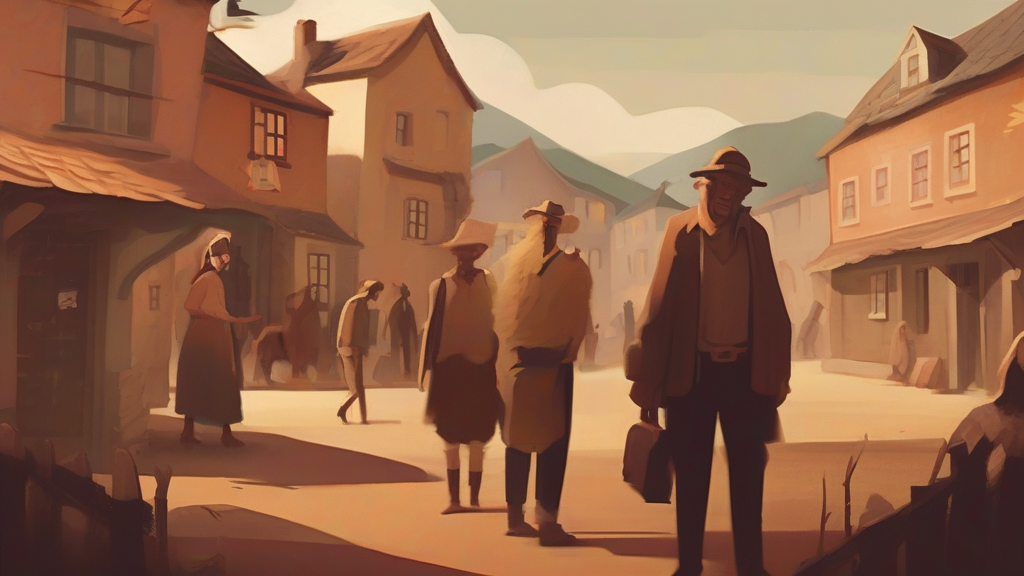
What does townfolk mean?
Townfolk means the people who live in a town, considered as a collective community. The word is more than a simple synonym for residents: it can suggest the shared identity, traditions, character, and relationships of a particular place. It is especially common in British and American literary writing, historical narration, and descriptions of small communities, where it may convey warmth, familiarity, or a sense of local pride. In less formal or highly neutral contexts, townspeople, local residents, or inhabitants are often more suitable. Townfolk is normally treated as a collective noun, with townfolk serving as both its singular and plural form. Related expressions such as local townfolk emphasize the connection between the people and their locality, while contrasts with countryfolk distinguish town life from rural life.
nounThe people living in a town, collectively. It can also refer more broadly to the local community and its characteristic character.
- The inhabitants of a town considered collectively, especially as a local community.
"The townfolk gathered at the market to celebrate the festival."
"Many of the townfolk still meet at the old inn every Friday evening."
"The novel's townfolk are portrayed with a mixture of affection and skepticism."
Townfolk is normally a collective noun and remains unchanged when referring to the inhabitants of a town. The form townfolks is uncommon and may sound nonstandard.
"The townfolk are preparing for the annual summer celebration."
Townfolk turns a place into a community: it is the collective spirit of the people who call a town home.
Reviewed by Deb Chak, Editor. AI-assisted content curated by RJS Tech Solutions LLP.
Etymology of townfolk
Townfolk is a compound formed from town and folk, both of which are old English elements: tun referred to an enclosure or settlement, while folc meant a group of people. The compound developed in English during the Middle English period and came to denote the people belonging to a town. Modern words such as township reflect the town element, while folklore and folkway reflect the folk element.
How townfolk is actually used
Townfolk is traditional in tone and is especially common in literary, historical, and regional contexts. In neutral modern English, townspeople or local residents may be preferred. It is generally a collective noun rather than a countable noun.
Easily confused with townfolk
Townspeople is a closely related synonym, while townfolk often emphasizes the community as a whole or its distinctive local character.
Townfolk refers to people associated with a town, whereas countryfolk refers to people associated with the countryside or rural life.