
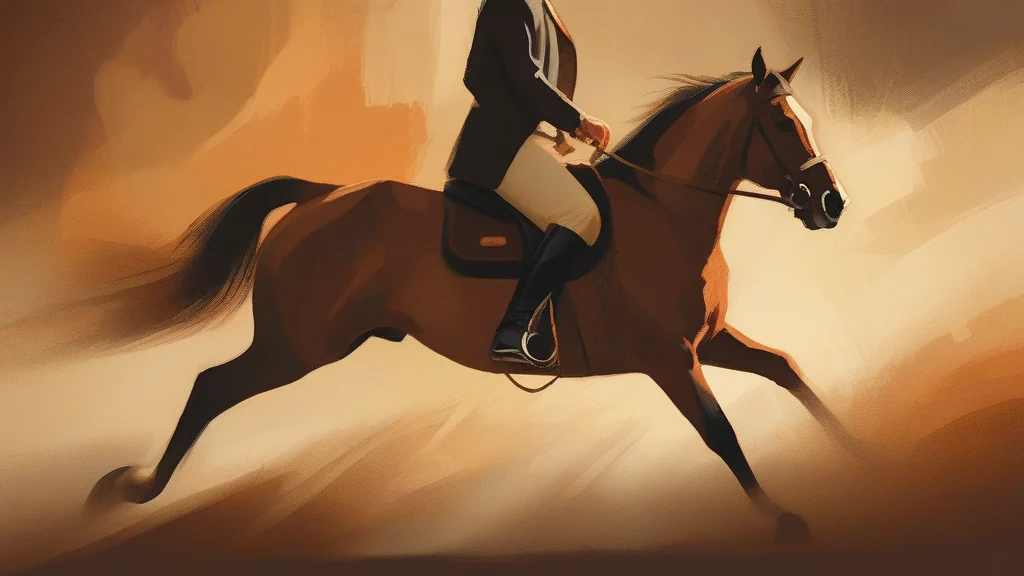
What does trot mean?
Trot describes a brisk, purposeful movement that is quicker than a walk but usually less forceful than a run. Its best-established meaning is connected with horses: a horse trots when it moves at a controlled gait between a walk and a canter, and a rider can trot a horse at that pace. In everyday speech, the word can also mean to walk or move quickly, as in 'we trotted down the street' or 'he trotted off to answer the door.' As a noun, a trot refers either to the gait itself or to a ride at that pace, while informal usage can mean a brisk walk. The word is useful because it captures movement that is lively and purposeful without suggesting the speed or intensity of running. It appears in both British and American English, with its horse sense remaining particularly prominent.
A horse's gait between a walk and a canter, or a ride at that pace; informally, a brisk walk.
"They set off at a gentle trot, letting the horse conserve its energy."
To move at a trot, especially to ride a horse at a brisk, controlled gait; informally, to walk quickly.
"He trotted the pony around the field while it was still young."
The plural trots is used for separate instances of the gait or for brisk walks, though it is less common than the singular in ordinary speech.
"The horses performed several trots before resting."
A trot is the horse world's middle gear: quicker than a walk, calmer than a canter, and full of purpose.
Reviewed by Deb Chak, Editor. AI-assisted content curated by RJS Tech Solutions LLP.
Where does trot come from?
The word is recorded in Middle English, where it referred both to a horse's gait and to moving at a brisk pace. It is generally traced to Old French troter, meaning 'to trot,' although the ultimate origin of that form is uncertain. English later extended the verb into informal expressions for moving or leaving quickly and developed common forms such as trotted, trotting, and trotter.
Related word forms
How trot is actually used
The horse-related senses are standard in British and American English. The sense meaning 'walk briskly' is informal, and expressions such as 'trot off' or 'trot along' often imply leaving or proceeding with energy rather than literal horseback riding.
Easily confused with trot
Trot is a verb or noun referring to a brisk gait or movement, whereas trout is a freshwater fish or its flesh.