
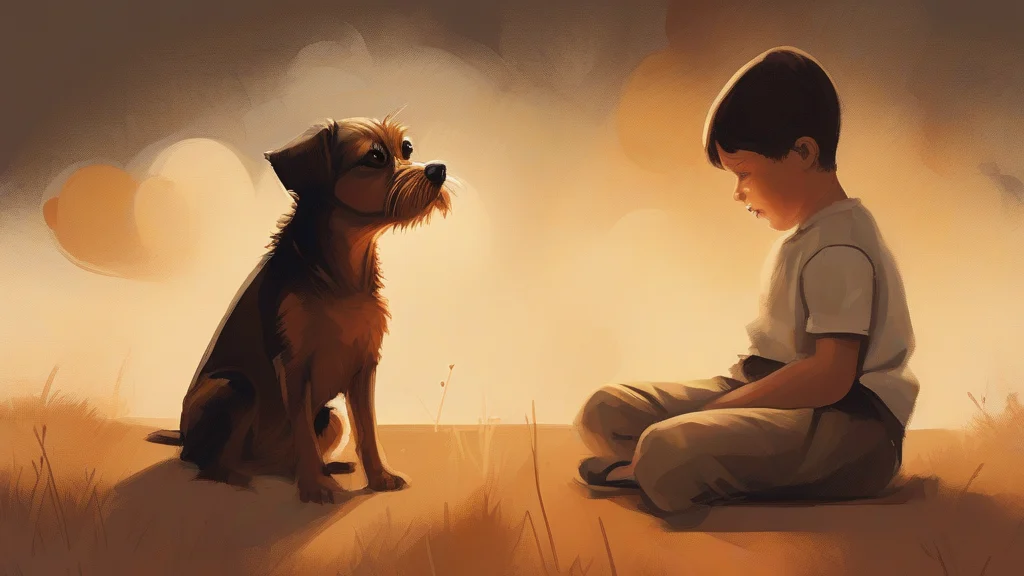
What does tyke mean?
Tyke usually means a small child who is lively, mischievous, or mildly troublesome. It is an informal word, especially associated with British usage, and its tone depends heavily on context: a parent might call a playful child a little tyke with evident affection, while a more hostile speaker might use it as an insult. The word does not necessarily imply cruelty or serious misbehavior; it usually conveys annoyance mixed with amusement. An older sense of tyke denotes a mongrel or mixed-breed dog, and the term was also formerly used for a contemptible person. These older meanings help explain the word's history and its long-standing association with unruly or low-status characters. Today, however, the familiar sense is the troublesome child. Tyke is therefore useful as an affectionate, humorous alternative to words such as rascal, imp, or brat, though its slightly disparaging edge makes it less suitable for formal or highly sensitive contexts.
nounA small child regarded as mischievous, tiresome, or mildly annoying. In an older and less common sense, a tyke is a mongrel or mixed-breed dog.
- A small child considered mischievous, annoying, or tiresome.
- A mongrel or mixed-breed dog.
- A contemptible or insignificant person.
"Her youngest brother is a lively little tyke who is always asking questions."
"The tyke bolted down the street as soon as the door opened."
"In older uses of the word, a tyke was a mongrel or mixed-breed dog."
The regular plural is used for multiple children or animals; the singular is more common in the modern child sense.
"The neighbors called the playful twins little tykes."
Tyke began as a word for a mongrel dog before becoming a teasing label for a small, lively menace.
Reviewed by Deb Chak, Editor. AI-assisted content curated by RJS Tech Solutions LLP.
Etymology of tyke
Tyke is attested from the 16th century as a word for a mongrel or mixed-breed dog. Its precise origin is uncertain. During the 19th century it developed figurative senses for a contemptible person and then for a small, troublesome child, the sense that remains dominant today.
Related word forms
How tyke is actually used
The word is chiefly British but is also understood in American English. Its modern sense for a child is informal and may be affectionate or teasing depending on context. The senses for a dog and for a contemptible person are now less common.
Easily confused with tyke
A tiger is a large striped member of the cat family, whereas a tyke is usually a small, troublesome child or, in an older sense, a mongrel dog.