
What does urchin mean?
Urchin most commonly denotes a sea urchin, a marine animal whose rounded body is covered with movable spines. It belongs to the echinoderms, a group characterized by a distinctive radial body arrangement; most sea urchins display five-part symmetry. In informal British and American English, an urchin may also mean a mischievous, impudent, or unruly child, particularly one whose behavior is energetic and difficult to control. This child sense grew from the word's older animal associations and the idea of someone being prickly or difficult to handle. An older use of urchin referred to a hedgehog, but that meaning is now obsolete. In modern writing, the zoological sense is straightforward, while the child sense depends on tone and may sound affectionate, nostalgic, or mildly disapproving. Urchin is useful because it combines a precise biological designation with a vivid, culturally familiar description of a lively or troublesome youngster.
nounA spiny marine animal of the class Echinoidea, especially the familiar sea urchin with a rounded, often prickly shell. By extension, an urchin can be a mischievous or unruly child; the older sense referring to a hedgehog is now obsolete.
- A spiny marine animal of the class Echinoidea, especially a sea urchin.
- A mischievous, impudent, or unruly child.
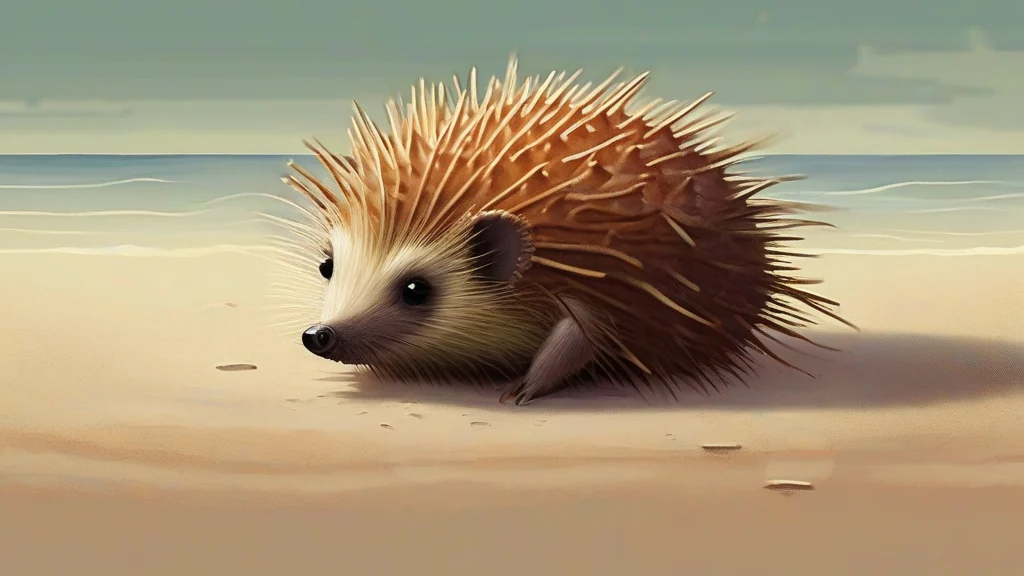
- A hedgehog; this older sense is now largely obsolete.
"The children explored the tide pools, carefully avoiding the purple urchins clinging to the rocks."
"A bright orange urchin moved slowly across the reef, its spines projecting in every direction."
"The teacher smiled as the urchin pulled a prank that fooled nobody but himself."
The regular plural applies to the noun's animal and child senses.
"Clusters of urchins covered the rocks near the shore."
Most sea urchins have a five-part body plan, making their living pincushion-like bodies nature's geometric stars.
Reviewed by Deb Chak, Editor. AI-assisted content curated by RJS Tech Solutions LLP.
Where does urchin come from?
English borrowed urchin through Old French ourchin from Latin echinus, a word derived from Greek echinos, meaning “hedgehog” and also referring to the sea urchin. The Greek name was applied to the marine animal because of its projecting spines and resemblance to a hedgehog. The word's senses for a hedgehog and, later, a mischievous child developed through extensions of these older animal meanings.
Related word forms
How urchin is actually used
The animal sense is the standard literal use. The sense meaning a mischievous child is informal and somewhat old-fashioned, but can be affectionate or dismissive depending on context. The hedgehog sense is historical and rarely encountered in modern English.