
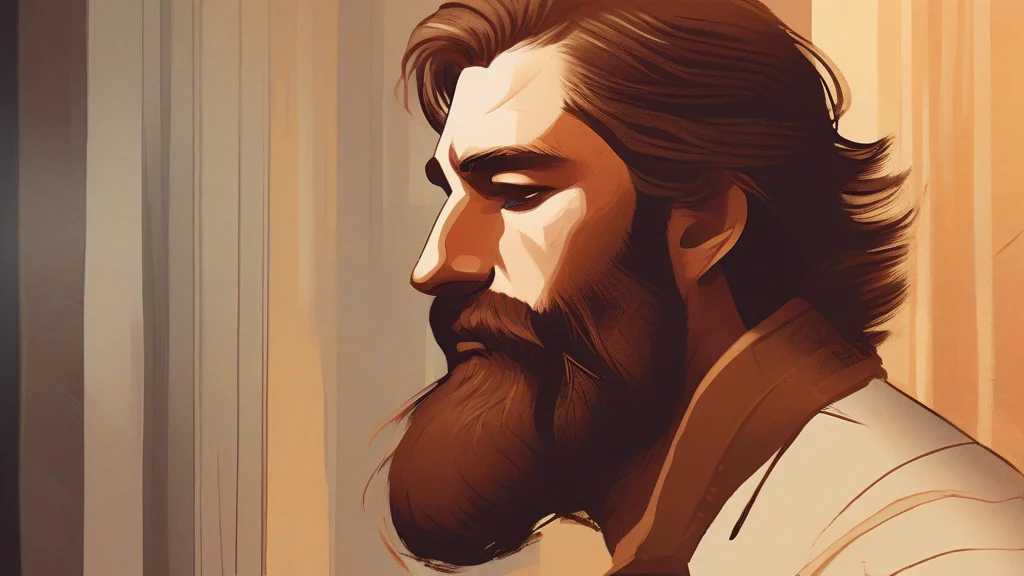
What does unshorn mean?
Unshorn is an adjective meaning that hair, fleece, or a beard has not been cut or trimmed. It is especially associated with sheep and other animals whose natural covering has been left intact, but it can also describe a person with long hair, an unshorn beard, or unruly locks. The word has a vivid, slightly old-fashioned and literary character, which suits its traditional associations with pastoral life and an unaltered natural state. Figuratively, unshorn can describe a person, idea, or institution that remains independent, unconventional, or resistant to social pressure. In that sense, it often carries positive connotations of authenticity and freedom, though it may also suggest eccentricity or lack of refinement. Unshorn is formed from the prefix un- and the participial form shorn, making its basic contrast clear: something unshorn has escaped the shears.
adjectiveHaving hair, fleece, or a beard that has not been cut or shorn; left natural. Figuratively, it describes something that remains untamed, untrimmed, or resistant to conventional restraint.
- Literally, having hair, fleece, or a beard that has not been cut or trimmed.
- Figuratively, remaining wild, unconstrained, unspoiled, or resistant to being made to conform.
"The shepherd left a small flock unshorn so that the animals' fleece would grow thick through the winter."
"The farmer kept the young lambs unshorn until the first snowfall."
"Her unshorn commitment to the community was more authentic than any polished campaign slogan."
An unshorn sheep keeps its fleece; an unshorn spirit keeps its independence.
Reviewed by Deb Chak, Editor. AI-assisted content curated by RJS Tech Solutions LLP.
Where does unshorn come from?
Unshorn is formed from the prefix un- and shorn, the past participle of shear. The underlying verb comes from Old English sceran, meaning “to cut or shear,” and developed into the modern English forms shear, shears, and shorn. The cognate German scheren and Dutch scheren continue the same Germanic word family.
How unshorn is actually used
The word is relatively uncommon and has a literary, traditional, or historical tone. Its figurative use is often sympathetic, suggesting independence and authenticity, though it can also imply untidiness or deliberate unconventionality.
Easily confused with unshorn
Unshaven describes hair or a beard that has not been shaved, whereas unshorn can refer more broadly to hair, fleece, or a person that has not been cut or trimmed.