
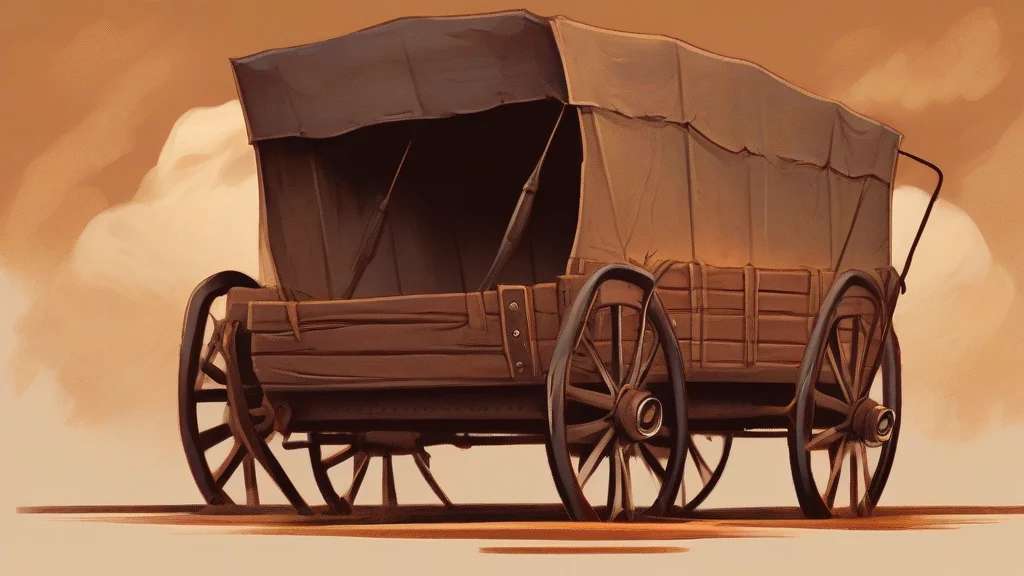
What does wagoned mean?
Wagoned is the past tense and past participle of wagon and can also function as an adjective. As a verb, it means to travel in a wagon or to carry people or goods in one. The adjective use, found in expressions such as wagoned goods, identifies something as transported by wagon. The word has a strongly historical or literary character: it evokes settlements, trade, migration, and overland travel before railways and modern lorries became dominant. It is therefore more evocative than the general words transported or conveyed, while also being more restrictive, because the mode of transport is specifically a wagon. In ordinary contemporary speech, people are more likely to say wagon transport, wagonload, or simply describe the journey than use wagoned. Understanding the word nevertheless clarifies older prose and preserves a compact record of a once-central way of moving goods and people. Its form follows normal English verb inflection, with -ed marking completed action, while the same ending also creates the participial adjective.
To travel in a wagon or to transport people or goods in one.
"The expedition wagoned its equipment across the rough country."
The transitive use emphasizes transport by wagon; the intransitive use describes the journey.
Carried, transported, or conveyed by wagon.
"The company advertised wagoned timber for sale at the depot."
This participial use commonly appears attributively before a noun.
Before railways and trucks, a wagoned journey was the practical reality of moving people, freight, and news across the land.
Reviewed by Deb Chak, Editor. AI-assisted content curated by RJS Tech Solutions LLP.
Etymology of wagoned
The form wagoned was created in English by applying the regular past-tense and participial ending -ed to wagon. Wagon entered English in the early 16th century from Dutch wagen, a Germanic word for a cart or similar vehicle. Related Germanic forms include German Wagen and Swedish vagn, while English also developed forms such as wagoner and wagonage from the same base.
Related word forms
How wagoned is actually used
Chiefly historical, literary, or narrative. The word evokes overland travel and freight movement before railways and modern lorries became dominant, and it is less common in ordinary contemporary speech than transported or conveyed.
Easily confused with wagoned
Waggoned is the traditional British spelling of the same inflected form; wagoned is standard in American English and is also accepted in British English.