
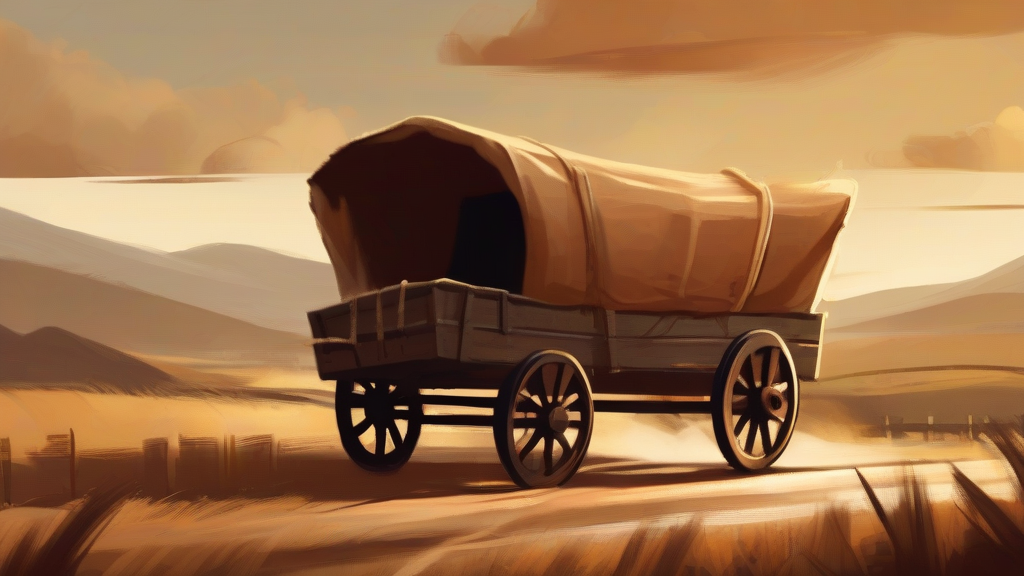
What does wagoning mean?
Wagoning is an old-fashioned word for traveling or riding in a wagon, and by extension for transporting goods that way. It appears both as a noun naming the activity and as the present participle of the verb “wagon.” The expression is now chiefly literary or historical, evoking covered wagons, wagon trains, and the movement of settlers and freight across unsettled territory. Modern speakers are more likely to say wagon trip, wagon ride, or travel by wagon, but “wagoning” preserves an older rhythmic style and can make a period setting sound vivid. The word has a practical as well as a nostalgic appeal: it identifies both the vehicle and the mode of travel without unnecessary explanation. In historical prose it suggests the slow movement, communal labor, and exposed conditions associated with journeys by road. Its meaning remains readily understandable, making it a useful example of how ordinary transport vocabulary can acquire strong historical associations over time.
The act or practice of traveling or transporting goods in a wagon.
"The early settlers continued wagoning even after the first roads were cut through the valley."
Normally treated as an uncountable noun, though wagonings can be used occasionally when separate journeys are counted.
Travel or transport something in a wagon; used as the present participle of wagon.
"The company was wagoning supplies to the remote settlement."
The verbal form has a dated or historical tone in present-day English.
The plural is rarely needed because wagoning is normally treated as an uncountable noun.
"The archive documents the wagonings of settlers traveling across the plains."
Before railways, wagoning connected farms, ports, and frontier settlements, turning a simple vehicle into the backbone of inland travel and trade.
Reviewed by Deb Chak, Editor. AI-assisted content curated by RJS Tech Solutions LLP.
Etymology of wagoning
Wagoning was formed in English from wagon and the suffix -ing, following the same pattern as other gerunds and activity nouns. Wagon entered Middle English from Dutch wagen, a word inherited from Proto-Germanic and related to English wain. Words such as wagoner, wagonry, and wagonwright were also formed within the English word family.
How wagoning is actually used
The word now sounds dated, literary, or historical, particularly in descriptions of westward travel and wagon trains. In ordinary modern speech, wagon is more often used in compounds such as wagon ride and wagon trip.
Easily confused with wagoning
Wagoning means traveling or transporting goods by wagon, whereas wagering means placing bets.