
What does werewolfish mean?
Werewolfish is an adjective meaning like a werewolf: feral, predatory, uncanny, or suggestive of a transformation into a wolf-like creature. It is most often used in imaginative or literary contexts, either for an actual creature with a lupine appearance or, figuratively, for something that seems wild, dangerous, or driven by an uncontrollable appetite. The word carries a heightened, dramatic connotation and is less neutral than ordinary descriptions such as “wild” or “feral.” In figurative use, werewolfish suggests more than simple animal-like behavior: it evokes mystery, menace, and the instability of something caught between human and beast. Its uncommon character makes it especially effective in fiction, poetry, reviews, and descriptive prose. Although the word is used in both British and American English, it remains more literary than everyday.
adjectiveResembling or characteristic of a werewolf, especially in appearance, ferocity, or a wild and uncanny quality.
- Resembling or characteristic of a werewolf.
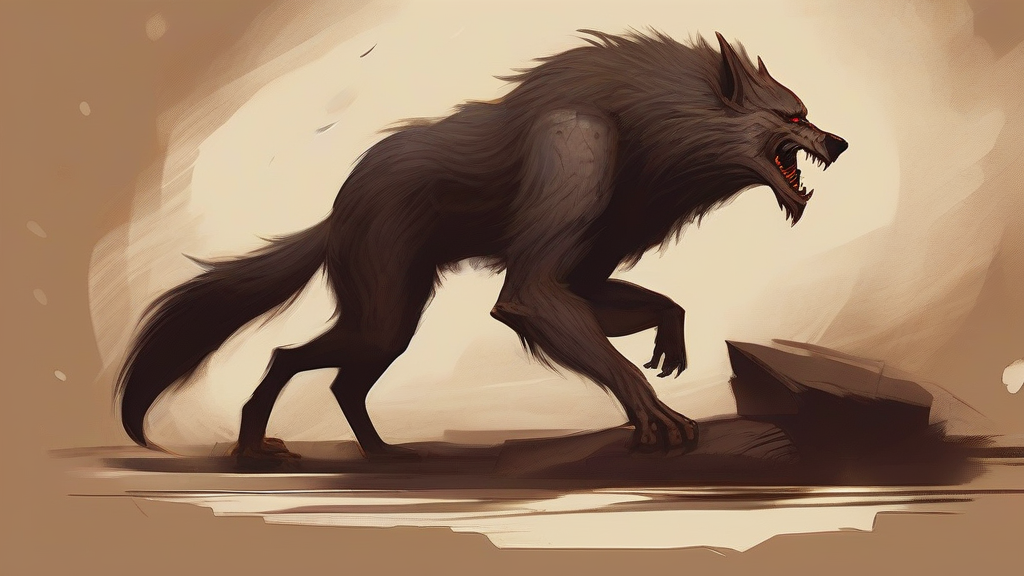
"The creature's werewolfish appearance frightened the villagers as it moved through the dark forest."
"The creature's werewolfish eyes and towering silhouette made it look more like a nightmare than an animal."
"The review called her performance werewolfish, capturing its raw energy and feral intensity."
Werewolfish turns a frightening legend into a vivid adjective: it suggests something feral, uncanny, and hungry for the night.
Reviewed by Deb Chak, Editor. AI-assisted content curated by RJS Tech Solutions LLP.
Etymology of werewolfish
Werewolfish was formed by adding the English suffix -ish, meaning “like” or “characteristically,” to werewolf. Werewolf comes from Old English werewulf, generally analyzed as a compound of wēr, “man,” and wulf, “wolf.” The modern form developed through changes in English spelling and pronunciation, while werewolfish is a later English adjective built on that established word.
Related word forms
How werewolfish is actually used
The word is literary, imaginative, and relatively uncommon. It can describe an actual werewolf-like appearance, but is also used figuratively for something fierce, untamed, or unsettlingly wild.
Easily confused with werewolfish
A werewolf is the mythical creature itself, whereas werewolfish is an adjective describing something that resembles or evokes such a creature.