
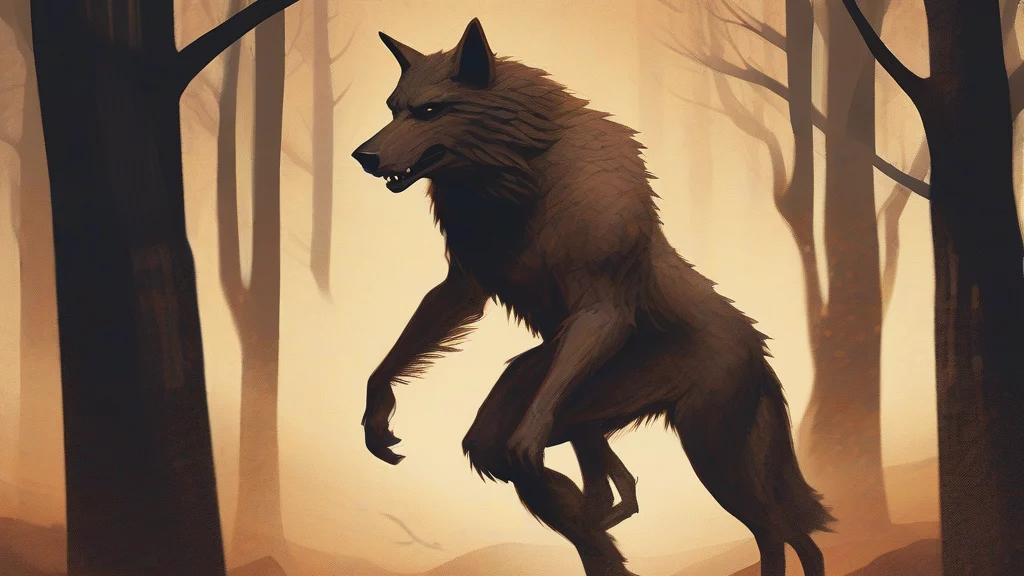
What does werwolf mean?
A werwolf is a creature from European folklore in which a human being transforms into a wolf through magic, a curse, or an inherited condition. The figure became especially prominent in stories concerning full moons, transformations that could be reversed only under particular conditions, and vulnerable victims such as children or people bitten by the creature. In modern writing, the word also serves as a metaphor for someone who is fierce, predatory, ruthless, or driven by uncontrollable instincts. The familiar English spelling is werewolf, whereas werwolf reflects the German form more closely and is now relatively uncommon outside German-derived or stylized usage. The word is especially useful when discussing werewolf films, novels, games, and legends, as well as the broader cultural history of shapeshifting. Its combination of an ordinary human identity and a dangerous animal form has made it one of the most recognizable monsters in European folklore.
nounIn folklore, a werwolf is a human being who transforms into a wolf, usually because of a curse or magical influence. Figuratively, it can refer to a fierce, predatory, or wolf-like person.
- A mythical human who transforms into a wolf.
- A person characterized as savage, predatory, or wolf-like.
"The village feared the werwolf that emerged from the forest whenever the moon was full."
"According to the legend, only a silver bullet can stop the werwolf."
"The director used the werwolf as a symbol for the character’s untamed, predatory nature."
The standard plural is werwolves, with the medial vowel changing from e to o.
"The stories describe werwolves roaming the woods during the full moon."
A single enchanted bite can turn a human into a wolf—an idea that has haunted European folklore for centuries.
Reviewed by Deb Chak, Editor. AI-assisted content curated by RJS Tech Solutions LLP.
Etymology of werwolf
The English word comes from German Werwolf, a compound of wer, meaning “man,” and Wolf, meaning “wolf,” so its literal sense is “man-wolf.” The term was applied to the folklore creature before English established werewolf as the familiar spelling. English also has wolf and related forms such as wolfish and wolflike, which share the same Germanic word root as the second element of Werwolf.
How werwolf is actually used
In modern English, werewolf is much more common than werwolf. The latter occurs especially in German-derived, archaic, or deliberately stylized contexts and is normally written lowercase in ordinary English prose.
Easily confused with werwolf
Werewolf is the standard English spelling, while werwolf is a less common variant that also closely matches the German spelling.