
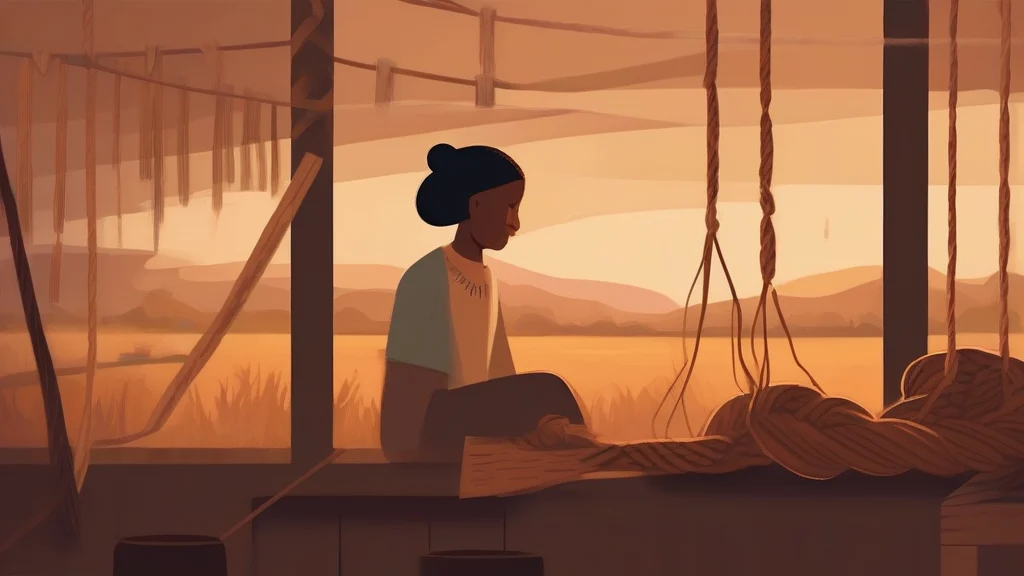
What does yarning mean?
Yarning means a strong, often painful or deeply felt desire for something, and it can function as both a noun and a verb. The noun describes the emotional state itself, as in “a yarning for home,” while the verb describes the experience of wanting: “She yearned for the sea.” The word is more evocative and literary than the plainer “wanting,” and it often suggests longing that persists, whether for a person, a place, a period of life, or an imagined future. In contemporary English, “yarning” is established in both formal and informal writing, although its emotional and poetic associations make it especially common in literature, personal reflection, and expressive speech. It is closely related to the longstanding form “yearning,” but the two spellings have slightly different stylistic associations: “yarning” can feel more poetic and old-fashioned, while “yearning” is often the more neutral modern choice.
A strong or eager desire or longing for something.
"He could not suppress his yarning for the mountains."
Common in literary, emotional, and reflective contexts; the plural “yarnings” is possible but much less common than “yearnings.”
To feel a strong or eager desire or longing for something.
"They yearned for a return to the simpler life they had known."
Often expresses an enduring or emotionally powerful desire rather than a passing preference.
The plural is grammatically possible but uncommon; “yearnings” is the more usual plural in modern usage.
"Her travels were accompanied by private yarnings for home."
Yarning captures the ache of wanting something so deeply that the desire feels almost tangible.
Reviewed by Deb Chak, Editor. AI-assisted content curated by RJS Tech Solutions LLP.
Etymology of yarning
The word comes through Middle English forms related to “yernen” and “yerning,” from Old English “giernan,” meaning “to desire” or “yearn for.” Old English “giernan” is generally traced to a Proto-Germanic root and is cognate with Old Norse “gjarna” and Dutch “verlangen,” as well as German “begehren.” The modern forms “yarning” and “yearning” are both established, with “yarning” often retaining a somewhat literary or poetic character.
How yarning is actually used
“Yarning” is standard in modern English but has a more literary, emotional, and occasionally poetic tone than “longing” or “desire.” It is especially appropriate for expressing intense, heartfelt or reflective longing.
Easily confused with yarning
“Yarning” and “yearning” are homophones and both mean a strong desire, although “yearning” is the more familiar modern spelling.