What does china mean?
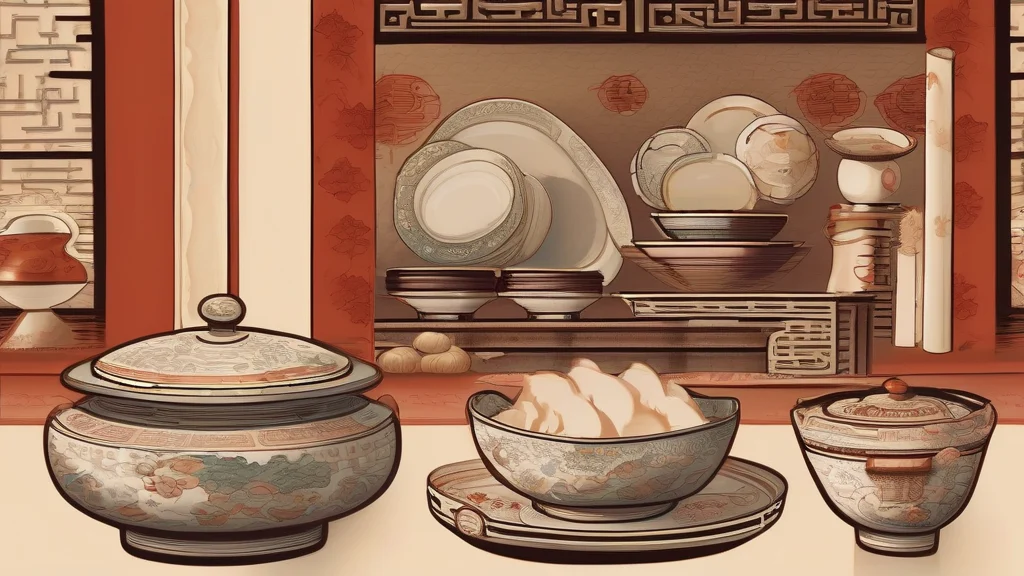
China refers to porcelain, and by extension to dishes, cups, and decorative objects made from it. The word arose because porcelain was long associated with its country of origin, China, which held a monopoly on true porcelain production until the technique spread to Europe in the early eighteenth century. In modern usage, china most often appears as an uncountable noun describing a household's collection of ceramic tableware, especially prized sets kept for formal occasions — one speaks of bringing out "the good china." Related terms include bone china, a durable porcelain strengthened with bone ash that originated in England, and chinaware. The word also anchors the well-known idiom "a bull in a china shop," describing a person whose clumsiness threatens delicate surroundings. Connotations of elegance, tradition, and inheritance make china a word strongly associated with family heirlooms and celebratory meals.
nounChina is porcelain, or tableware and ornaments made of porcelain or similar ceramic material. It is typically used as an uncountable mass noun referring to a household's collection of such dishes.
- Porcelain or ceramic tableware and ornamental objects, considered collectively.
- A piece of such tableware (less common, countable use).
"She brought out the good china for the anniversary dinner."
"He inherited his grandmother's hand-painted china when she passed away."
"Be careful in here — this shop is like a bull in a china shop waiting to happen."
Rarely used in the plural; china normally functions as an uncountable mass noun. A plural appears only in specialized contexts, such as distinguishing different collections or types of ceramic ware.
"The museum's collection includes European and Asian chinas from several centuries."
The English word for fancy dinner plates is literally just the country it came from — for centuries, real porcelain existed nowhere else on Earth.
Reviewed by Deb Chak, Editor. AI-assisted content curated by RJS Tech Solutions LLP.
Etymology of china
The word china derives from the country name China, which entered English via Persian and ultimately reflects the Chinese Qin dynasty. Because porcelain was first imported to Europe from China and remained uniquely Chinese for centuries, English speakers naturally called the material itself "china," with the usage established by the late sixteenth and early seventeenth centuries. The compound "chinaware" followed as a natural extension.
Related word forms
How china is actually used
Usually treated as an uncountable mass noun in everyday use. The term carries connotations of fineness, formality, and heirloom quality; "fine china" specifically denotes high-quality porcelain reserved for special occasions. The idiom "a bull in a china shop" describes someone clumsy in delicate situations.
Easily confused with china
"China" capitalized is the East Asian country, while lowercase "china" refers to porcelain or ceramic tableware.