
What does ass mean?
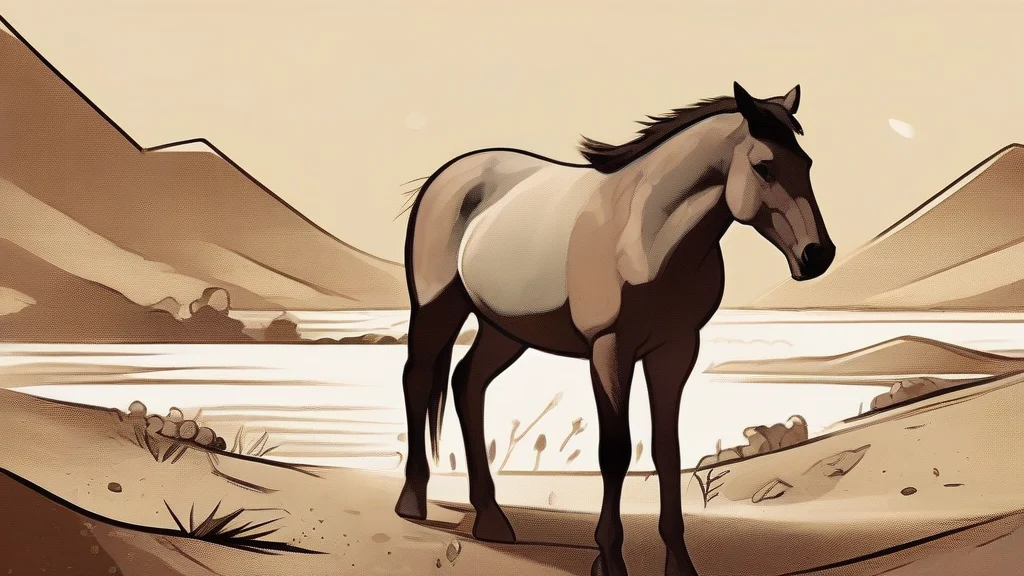
The ass is a domesticated member of the horse family, Equus asinus, known for its long ears, grey coat, loud bray, and remarkable stamina. Domesticated thousands of years ago, probably in northeastern Africa, it has served as a beast of burden across the Middle East, Africa, and Europe, prized for its sure-footedness and ability to survive on sparse fodder. In modern English, 'donkey' has largely replaced 'ass' as the everyday animal name, leaving 'ass' with a more formal or literary flavor when applied to the creature — as in the biblical and classical contexts where it appears constantly. Meanwhile, especially in North America, 'ass' has developed vigorous informal meanings: a foolish or contemptible person ('stop being such an ass') and, more coarsely, the buttocks. These slang uses make the word risky in polite company despite its perfectly respectable core meaning. Its derivatives include 'jackass', originally a male ass and now also a term for a blockhead.
A domesticated hoofed mammal (Equus asinus) of the horse family, having long ears and a braying call, used since antiquity as a beast of burden.
"The merchant led his heavily laden ass through the crowded bazaar."
This is the original and still standard sense; in contemporary everyday speech 'donkey' is the more usual word.
(Informal) A person regarded as stupid, stubborn, or contemptible.
"Only an ass would sign the contract without reading it first."
Offensive or at least strongly informal; common in both British and American English.
(Vulgar slang, chiefly North American) The buttocks or anus.
"She slipped on the icy step and landed flat on her ass."
Coarse register; avoid in formal writing. Very productive in American idioms such as 'get your ass over here'.
Regular plural; note that in the slang sense for buttocks it is rarely pluralized except in phrases like 'kicked their asses'.
"The hillside was dotted with asses carrying firewood down to the village."
'Ass' is actually the original, respectable English name for the donkey — the animal got its 'donkey' nickname only around the late 18th century.
Reviewed by Deb Chak, Editor. AI-assisted content curated by RJS Tech Solutions LLP.
Where does ass come from?
The English word 'ass' comes from the Old English 'assa', likely influenced by or borrowed through Celtic sources, ultimately deriving from the Latin 'asinus', which also gives us the adjective 'asinine'. Latin itself probably took the word from a Mediterranean source, possibly Semitic or Anatolian, reflecting how ancient the animal's domestication is. The separate slang senses in American English are much later developments of the same word, while 'donkey', the now-commoner animal name, emerged only in the late eighteenth century, perhaps from 'dun' (its typical grey-brown color).
Related word forms
How ass is actually used
In British English, 'ass' remains largely confined to the animal sense, while in American English it is far more frequent as a vulgar slang term for the buttocks or for a fool. The animal sense is neutral and acceptable in formal writing, but the slang senses are coarse and should be avoided in polite or professional contexts.
Easily confused with ass
Donkey refers to the same animal but is the ordinary modern term, whereas 'ass' is the older, more formal word and also carries vulgar slang senses referring to the buttocks or a foolish person.