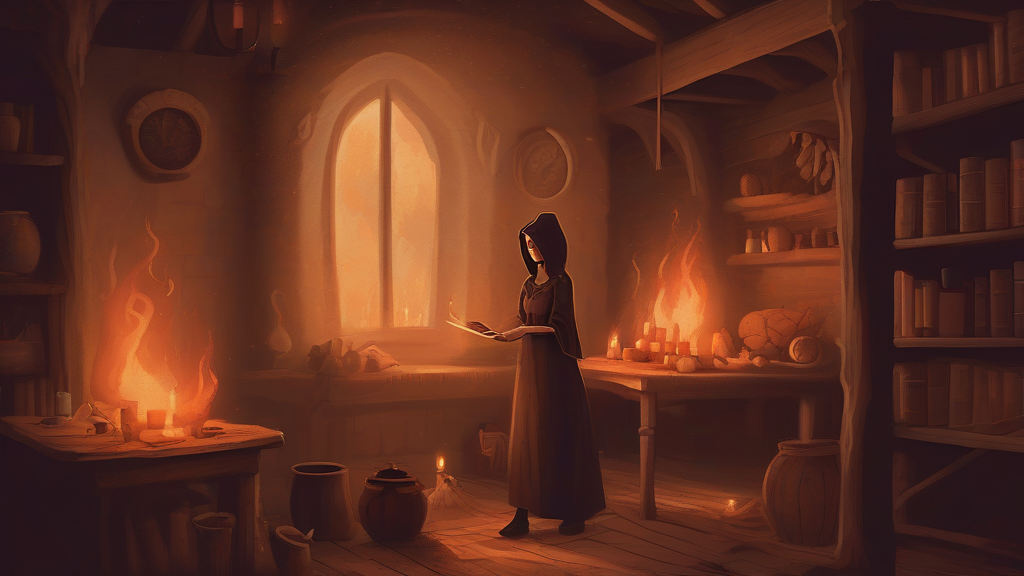
What does bewitchery mean?
Bewitchery refers to the power or practice of casting spells — the act of bewitching another person through magic. By extension, it describes any irresistible charm or fascination, as when a place, performance, or personality exerts a captivating hold over its audience. The word belongs primarily to literary and elevated registers rather than casual conversation, appearing most often in fantasy literature, folklore, poetry, and historical accounts of superstition. Its connotations are ambivalent: it can suggest sinister sorcery, but equally a delightful, almost hypnotic allure. A speaker might describe a dancer's stage presence as pure bewitchery, meaning she enthralled her audience completely. Related forms such as bewitch, bewitching, and bewitchment are far more common in modern English, making bewitchery itself a distinctive choice that lends an air of antiquity and enchantment to any description of spellbinding charm.
The power or practice of casting spells; magic or enchantment.
"Tales warned of the bewitchery practiced in the woods beyond the village."
Literary and somewhat archaic; common in fantasy and historical contexts.
An irresistible charm or captivating influence exerted over someone.
"He could not explain the bewitchery of her voice, which made him forget every caution."
Figurative sense; typically applied to people, places, music, or performances.
Rarely pluralized; when it occurs, the plural refers to multiple distinct instances or kinds of enchantment.
"The grimoire catalogued the bewitcheries of a dozen vanished cultures."
Before 'charmed' was a compliment, falling under someone's bewitchery could get you accused of consorting with the devil.
Reviewed by Deb Chak, Editor. AI-assisted content curated by RJS Tech Solutions LLP.
Etymology of bewitchery
Bewitchery derives from the verb bewitch combined with the suffix -ery, which turns actions into nouns denoting a practice or quality. Bewitch itself comes from be- plus witch, a word rooted in Old English wicce (a female practitioner of magic), the same root that gives us witchcraft and witchery. The word emerged in English in the sixteenth and seventeenth centuries, an era when belief in witches and spells was widespread in Britain and colonial America.
Related word forms
How bewitchery is actually used
Bewitchery is a literary and somewhat archaic word, now rare in everyday speech. It carries connotations of both literal magic and metaphorical seduction or captivation, often used in fantasy fiction, poetry, and historical writing.
Easily confused with bewitchery
Witchery means witchcraft or magical practice generally, while bewitchery emphasizes the act or effect of casting a spell over someone specifically.