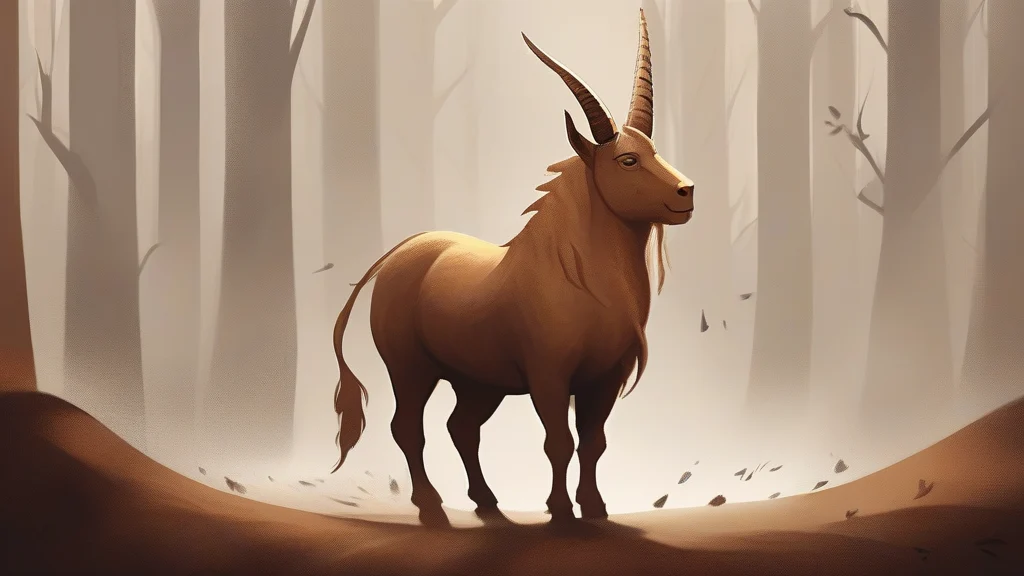
What does bicorn mean?
A bicorn is any creature or object possessing two horns, from the Latin prefix bi-, meaning 'two', combined with cornu, meaning 'horn'. The term appears most often in zoology, where it describes two-horned animals such as certain beetles or goats, and in heraldry and medieval legend, where the bicorn featured as a monstrous two-horned beast. In folklore it was famously paired with the Chichevache as its plump opposite, said to grow fat on a diet of obedient husbands. The word also functions adjectivally, describing anything two-horned in shape. Its derivatives include bicorne, the name of the distinctive two-cornered hat associated with Napoleon Bonaparte, and bicornuate, used in anatomy to describe a uterus divided into two horn-like cavities. Though rare in everyday speech, bicorn offers precision wherever paired horns or horn-like structures need naming.
An animal or creature having two horns, especially one appearing in myth, legend, or heraldry.
"Medieval bestiaries depicted the bicorn as a voracious beast that preyed upon the virtuous and the wicked alike."
Most commonly encountered in historical, literary, or zoological writing rather than everyday speech.
Having two horns or horn-like projections; shaped like two horns.
"The entomologist noted the beetle's distinctly bicorn head structure."
Often replaced by the more technical derivative 'bicornuate' in medical contexts, particularly for the uterus.
Standard English plural, used when referring to multiple two-horned creatures or objects.
"Ancient carvings showed warriors confronting fierce bicorns at the city gates."
In medieval legend, the bicorn was the well-fed counterpart of the starving Chichevache — it feasted on obedient husbands while his poor wife-eating cousin went hungry.
Reviewed by Deb Chak, Editor. AI-assisted content curated by RJS Tech Solutions LLP.
Etymology of bicorn
Bicorn derives directly from Latin bicornis, meaning 'two-horned', formed from bi- ('twice, two') plus cornu ('horn'). It entered English in the early modern period, initially as an adjective before developing noun uses for two-horned animals and legendary beasts. It shares its root with other Latinate words built on cornu, including unicorn ('one-horned') and cornucopia ('horn of plenty'), as well as anatomical terms such as cornea.
Related word forms
How bicorn is actually used
The word appears mainly in historical, zoological, and heraldic contexts. The related form 'bicorne' is now more common for the two-cornered hat. 'Bicornuate' is the standard medical term for a two-horned uterus.
Easily confused with bicorn
Bicorne most commonly refers to a two-cornered military hat worn by Napoleon, while bicorn more often denotes a two-horned animal or legendary creature.