What does buckeroo mean?
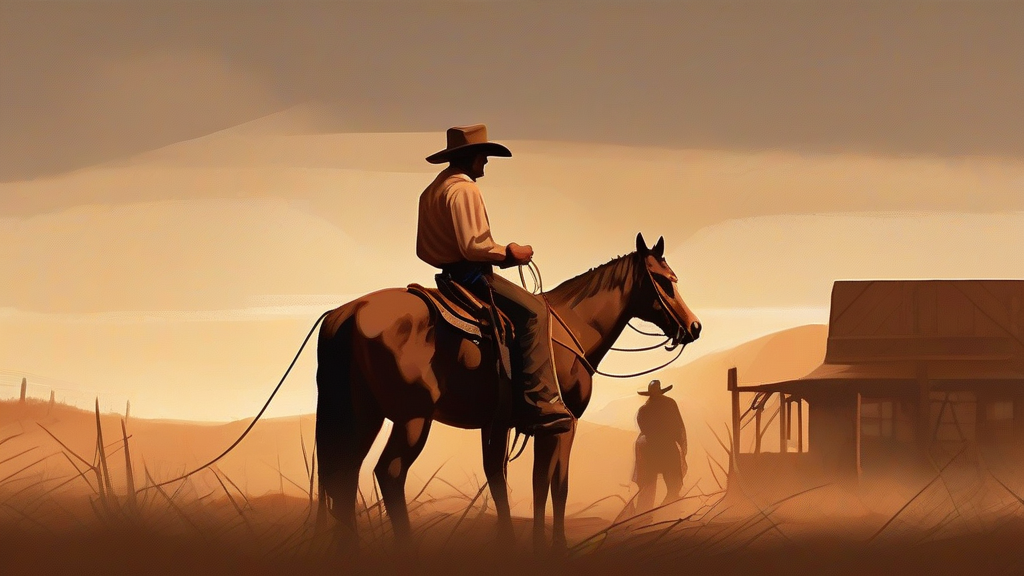
Buckeroo is a variant spelling of buckaroo, a noun meaning a cowboy or cowhand in the western United States, particularly one skilled in handling horses and cattle in the style inherited from Mexican vaqueros. The word entered English through Spanish vaquero ('cow herder'), from vaca ('cow'), and became especially attached to the ranching culture of the Great Basin region — Nevada, eastern California, Oregon, and Idaho — where vaquero traditions survived more strongly than elsewhere. In modern usage, both spellings are informal and often carry a romantic, nostalgic flavor, evoking wide-open rangeland rather than everyday labor. The spelling 'buckaroo' is far more common today, while 'buckeroo' appears chiefly in regional writing and folk contexts. The word is useful for anyone writing about the American West, offering an authentic alternative to the more generic 'cowboy'.
nounA variant of 'buckaroo', meaning a cowboy, especially one who breaks horses or handles cattle on ranches in the western United States.
- A cowboy or cowhand of the western United States, especially one skilled at breaking horses (variant spelling of 'buckaroo').
"The old buckeroo could gentle a wild mustang better than anyone on the range."
"The old buckeroo spent decades breaking mustangs on the Nevada range."
"Visitors to the rodeo watched the buckeroos rope steers with effortless skill."
Standard plural; simply add -s.
"Two weathered buckeroos sat by the campfire swapping stories about the trail."
Before 'cowboy' took over, the American West ran on 'buckaroos' — an English mangled version of Spanish 'vaquero', literally a 'cow man'.
Reviewed by Deb Chak, Editor. AI-assisted content curated by RJS Tech Solutions LLP.
Etymology of buckeroo
Buckeroo is an English phonetic respelling of Spanish vaquero, meaning 'cowboy' or 'herdsman', itself derived from vaca ('cow'), from Latin vacca. The word was adopted into American English during the westward expansion of the nineteenth century as Anglo settlers encountered Mexican and Californio vaquero culture. It took hold most firmly in the Great Basin, where vaquero-style horsemanship persisted, and 'buckaroo' (alongside variants like 'buckeroo') remains a living regional term there today.
Related word forms
How buckeroo is actually used
'Buckeroo' is an informal variant spelling of the more common 'buckaroo'. It carries a folksy, nostalgic connotation associated with the Great Basin ranching tradition of Nevada, Oregon, and California, where Spanish-influenced vaquero culture remained strong long after it faded elsewhere in the West.
Easily confused with buckeroo
'Buckeroo' is simply a spelling variant of 'buckaroo'; both mean cowboy, though 'buckaroo' is the more standard form.
Despite the similar spelling, 'buckra' is an unrelated historical term (from an African language) used in parts of the American South to refer to a white man.