What does caballine mean?
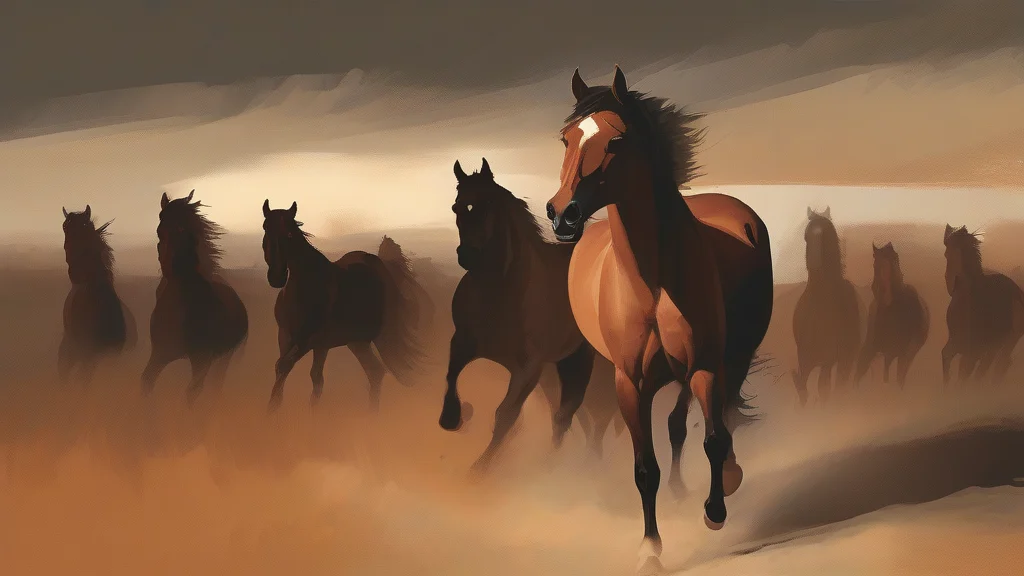
Caballine is an adjective meaning of or relating to horses. Derived from the Latin caballus, meaning a horse — particularly a working or pack horse — it entered English as a scholarly, literary alternative to the more familiar 'equine.' The word can describe anything connected with horses, from their physical anatomy and temperament to a human's horselike appearance or manner, as when a writer remarks on someone's long face and restless energy as distinctly caballine. Because it is rare and formal, caballine lends a deliberately elevated or antiquarian flavor to prose, and it appears chiefly in older equestrian writing, translations of classical literature, and occasional figurative description. In modern English, most writers reach for 'equine' instead, making caballine a useful marker of erudition for those who want an unusual synonym. Its Latin root also connects it etymologically to cavalry, cavalier, and chivalry, all descendants of the same ancient word for horse.
adjectiveOf or relating to horses; belonging or pertaining to the horse.
- Of, relating to, or resembling a horse or horses.
"The veterinarian's caballine expertise was evident the moment she entered the stable."
"The sculptor studied caballine anatomy for months before attempting the bronze mare."
"His caballine bearing — tall, broad-chested, and restless — made everyone think of a stallion."
Every time you hear the word 'chivalry,' you're hearing an echo of the same Latin root that gives us the obscure horse-word 'caballine' — both trace back to caballus, the Latin workhorse.
Reviewed by Deb Chak, Editor. AI-assisted content curated by RJS Tech Solutions LLP.
Etymology of caballine
Caballine derives from the Late Latin caballinus, an adjective formed from caballus, the Latin term for a horse, especially a gelding or beast of burden rather than a noble warhorse. English adopted the word in the early seventeenth century, when many Latinate adjectives were being absorbed into scholarly and literary prose. The same root caballus produced a remarkable family of descendants through Romance and French, including cavalry and cavalier via Italian and French forms, cavalcade, and ultimately chivalry, which came through Old French chevalerie from cheval, the Gallo-Roman descendant of caballus.
How caballine is actually used
A rare, learned, and somewhat literary word; 'equine' is the standard everyday adjective in modern usage. Caballine survives mainly in older or specialized texts on horses and in figurative descriptions of horsey appearance or manner.
Easily confused with caballine
Despite the shared 'cabal-' spelling, a cabal is a small secret political clique, while caballine means relating to horses.
Equine is the far more common adjective for horse-related matters; caballine is its rarer Latin-derived synonym.