What does carack mean?
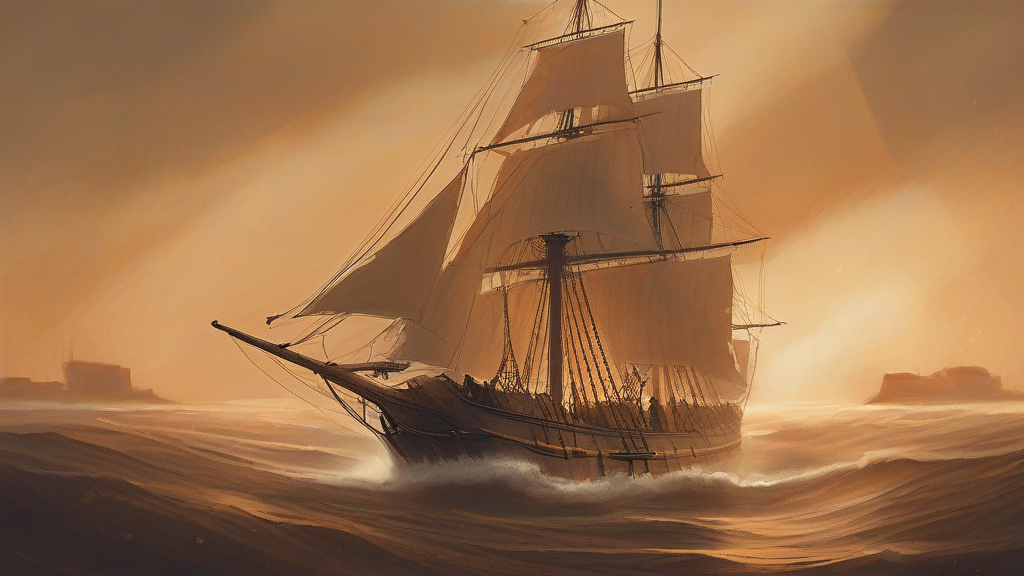
A carack was one of the great sailing ships of the age of exploration: a large, high-charged vessel with three or four masts, combining square sails on the fore and mainmasts with a lateen mizzen. Developed in the Mediterranean during the 14th century and perfected by Portuguese and Spanish builders, it became the workhorse of long-distance ocean trade, capable of carrying enormous cargoes of spices, silk, and bullion between Europe and Asia or the Americas. Armed versions served as formidable warships, and the type directly evolved into the galleon. The word appears today almost solely in historical contexts — chronicles, maritime archaeology, and literature — including Shakespeare's comparison of Portia to a golden-fleeced carack in The Merchant of Venice. Modern writers usually spell it "carrack," making "carack" a variant form prized mainly for its literary pedigree.
nounA carack is a large, broad-beamed sailing ship of the 14th–16th centuries, used especially by the Spanish and Portuguese for trade and as a warship; the type was a forerunner of the galleon.
- A large three- or four-masted merchant or warship of the late medieval period, developed in the Mediterranean and used widely by Iberian powers in the 14th–16th centuries.
"The Spanish carack rode low in the water, her hold crammed with silver and spices from the New World."
"A Portuguese carack returning from Goa carried pepper, cinnamon, and porcelain in her cavernous hold."
"The chroniclers described how the English privateers swarmed around the lumbering Spanish carack off the Azores."
Standard pluralization; also seen as "caracks" in older texts alongside the singular "carack."
"Three caracks lay at anchor in the harbor, their holds awaiting cargo from the Indies."
Shakespeare's most famous ship metaphor — 'her topsails scorched' — refers to the great caracks that hauled Spain's treasure across the Atlantic before the galleon took over.
Reviewed by Deb Chak, Editor. AI-assisted content curated by RJS Tech Solutions LLP.
Etymology of carack
The word derives from Old French "caraque," borrowed from Spanish or Portuguese "carraca," the name given to the big merchant ships built along the Iberian coasts. Many etymologists trace the term further back to Arabic "qaraqīr" (plural), meaning cargo-carrying vessels, which would have entered Romance languages through Mediterranean contact during the medieval period. Its cousin spelling "carrack" is now standard in English, while "carack" persists largely through early modern texts such as Shakespeare.
How carack is actually used
"Carack" is now almost exclusively encountered in historical writing about maritime trade and naval warfare of the 15th–17th centuries. The spelling "carrack" is far more common in modern scholarship; "carack" survives chiefly in older sources and in Shakespeare's Merchant of Venice, where Bassanio likens Portia to "a golden fleece... on such a carack."
Easily confused with carack
Carrack is simply the more common modern spelling of the same ship type, so the two are variants rather than different words.