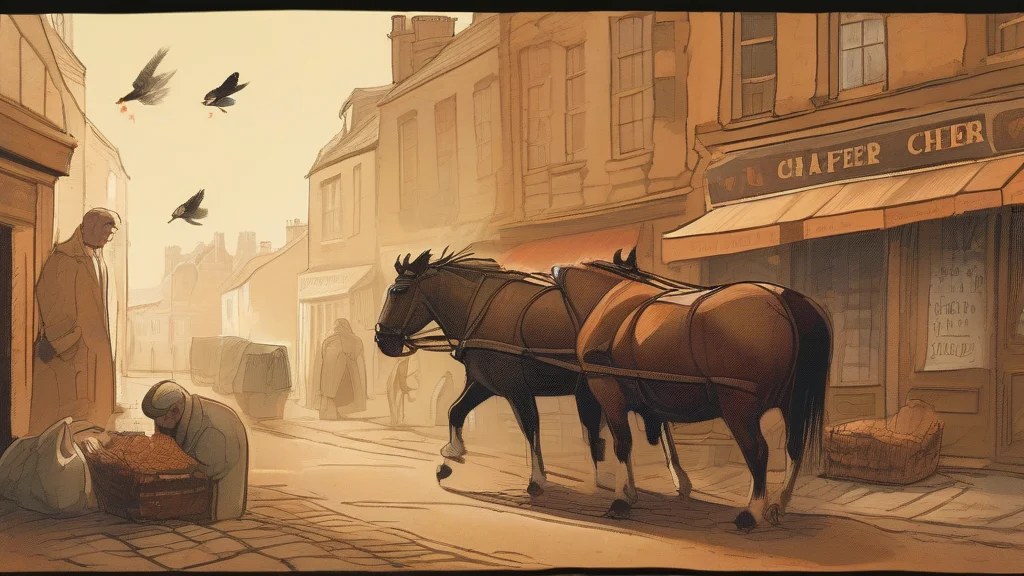
What does chaffer mean?
To chaffer is to bargain or haggle, especially over the price of goods, often with a suggestion of prolonged or slightly fussy negotiation. The word evokes traditional marketplaces where buyer and seller each try to secure the better end of a deal through good-natured sparring. It carries a distinctly old-fashioned, literary tone: modern speakers are more likely to say haggle or dicker, so using chaffer lends a passage a rustic or historical colour. The verb also has a largely obsolete secondary sense meaning to talk idly or chatter, which survives in some northern English dialects. Chaffer derives from Middle English chaffare, formed from Old English ceap (trade, purchase) and faru (a going, journey), making it a cousin of the word cheap. Its noun form, also chaffer, denotes bargaining itself. Writers reach for it when they want precision and period charm rather than everyday plainness.
To bargain or haggle over the price or terms of something, sometimes tediously or at length; formerly also, to talk idly or chatter.
"She spent the morning chaffering with stallholders over bolts of linen."
Literary or deliberately archaic in modern usage; the chatter sense is now chiefly dialectal.
Bargaining or haggling over terms; also, in older use, goods bought and sold, or traffic in merchandise.
"After much chaffer, they agreed on a price both could live with."
Now rare except in literary contexts; the commercial-goods sense is obsolete.
As a countable noun, chaffer is rare; when used, the plural simply adds -s.
"The market rang with the chaffers of buyers and sellers."
Chaffer hides inside 'cheap' itself — it comes from the same Old English root as 'ceap,' meaning trade or bargain.
Reviewed by Deb Chak, Editor. AI-assisted content curated by RJS Tech Solutions LLP.
Etymology of chaffer
Chaffer comes from Middle English chaffare(n), a compound of Old English ceap, meaning trade or purchase, and faru, meaning a journey or going — literally a 'trade-journey.' The same Old English root ceap gave rise to the modern adjective cheap, originally meaning something bought or traded rather than inexpensive. Related forms include chapman, an archaic word for a pedlar or merchant. The verb took on its familiar sense of haggling by late medieval times, and the idle-talk sense developed later in regional use.
Related word forms
How chaffer is actually used
Chaffer is somewhat formal or literary today, carrying an old-fashioned flavour that suggests rustic markets and leisurely negotiation. It can imply a slightly tedious or petty haggling. The idle-chat sense survives mainly in northern British dialect and historical writing.
Easily confused with chaffer
A chafer is a type of beetle, whereas to chaffer is to bargain or haggle.
To chafe means to become irritated or to rub and wear away, while to chaffer means to bargain over terms.