What does cittern mean?
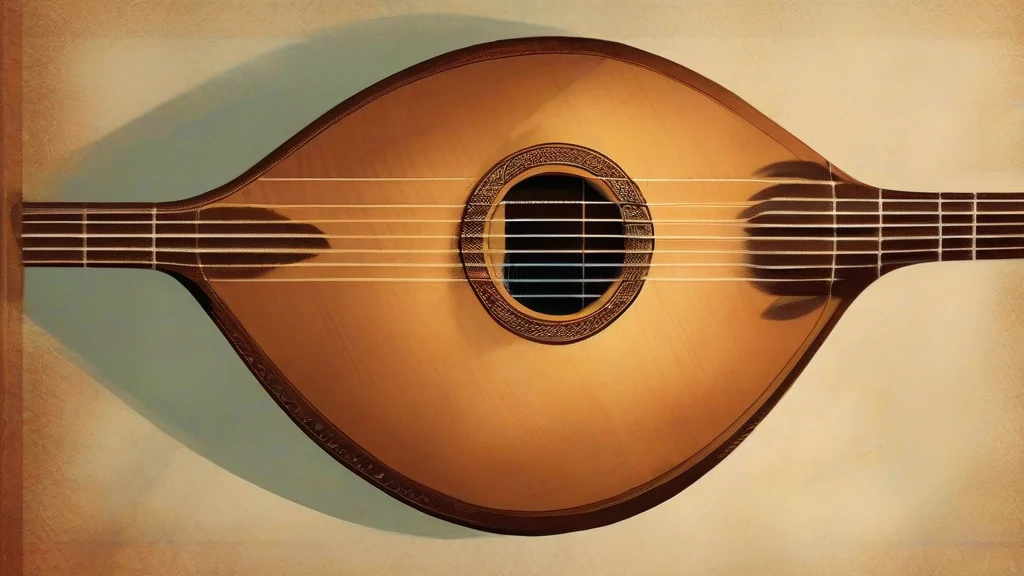
A cittern is a plucked stringed instrument belonging to the lute family, distinguished by its teardrop-shaped body, flat back, fretted fingerboard, and several courses of metal strings. Flourishing across Europe during the Renaissance and Baroque eras, it was prized for its bright, penetrating tone, produced by a plectrum, which made it well suited to both solo dance music and accompaniment. The instrument appears frequently in the art and literature of the period, including Shakespeare, and surviving examples are now valued by museums and collectors. Today the word arises chiefly in early-music scholarship and folk revival circles, where modern builders have created revival instruments inspired by historical designs; in Celtic music scenes the term is sometimes applied more loosely to related mandolin-family instruments. For readers, 'cittern' signals engagement with the rich world of historical stringed instruments and the ongoing revival of period performance.
nounA cittern is a plucked stringed instrument of the lute family, typically having a pear- or teardrop-shaped body, a flat back, a fretted neck, and four to six courses of metal strings, popular in Europe especially during the Renaissance and Baroque periods.
- A plucked stringed instrument of the Renaissance and later, with a flat-backed teardrop-shaped body, a fretted neck, and multiple courses of wire strings.
- Any modern revival instrument modelled on that historical form.
"The minstrel tuned his cittern before beginning the evening's ballads."
"She strummed a lively tune on her cittern at the folk festival."
"Museum conservators carefully restored the seventeenth-century cittern to playing condition."
Standard regular plural; used when referring to multiple instruments or historical examples.
"The collection displayed citterns from three different centuries."
Shakespeare mentions the cittern — and its metal strings made it loud enough to be the 'guitar' of the Elizabethan tavern.
Reviewed by Deb Chak, Editor. AI-assisted content curated by RJS Tech Solutions LLP.
Etymology of cittern
The word 'cittern' entered English in the Middle English period, ultimately deriving from Latin 'cithara', the name of an ancient Greek lyre-like instrument that Latin borrowed from Greek 'kithara'. The term reached English through Old French and related Romance forms, sharing this ancient root with words such as 'zither', 'guitar', and 'citole'. Its spelling stabilized as 'cittern' in early modern English, reflecting the instrument's widespread popularity at that time.
How cittern is actually used
Cittern is a relatively formal, specialized term encountered mainly in discussions of early music, historical instruments, and folk revival scenes. In modern Irish and Celtic music contexts, 'cittern' often refers loosely to a ten-stringed octave-mandolin-like instrument, which purists may distinguish as an octave mandola rather than a true cittern.
Easily confused with cittern
A zither is a family of stringed instruments with strings stretched over a flat soundbox and no neck, whereas a cittern has a neck with frets and a distinct body.
A bittern is a type of marsh-dwelling wading bird related to herons, entirely unrelated to the musical instrument called the cittern despite their similar spellings.