What does collard mean?
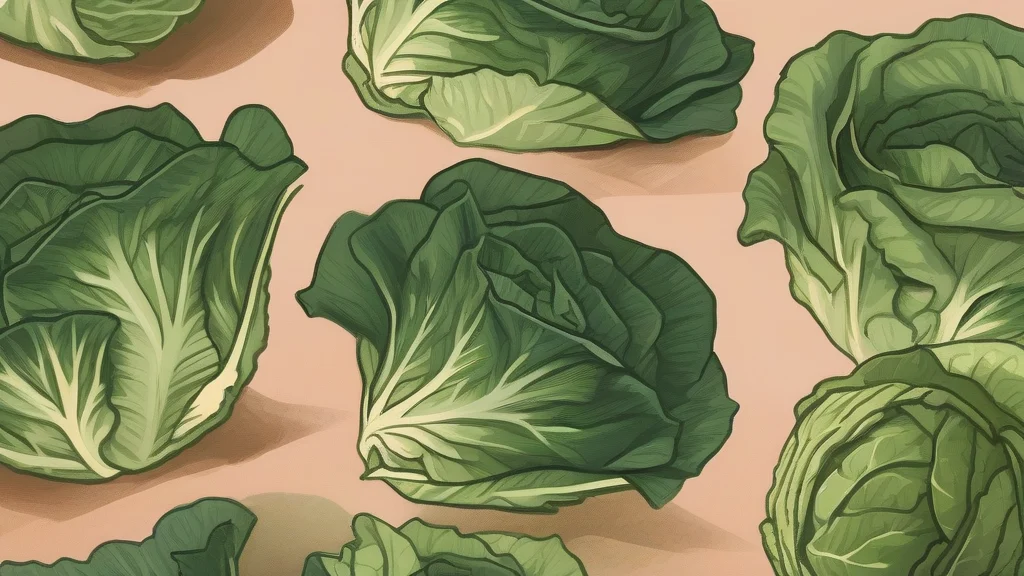
Collard is a noun referring to a hardy, non-heading member of the cabbage family prized for its large, smooth, dark-green leaves. Botanically grouped within Brassica oleracea alongside kale, cabbage, and broccoli, the collard plant grows in a loose rosette rather than forming a dense head, which makes it well suited to long harvest seasons and hot climates. In practice the word rarely appears alone: people speak of 'collards' or 'collard greens,' the collective form used at markets and on menus. The vegetable holds an especially honored place in Southern American cooking, particularly in African-American culinary tradition, where the leaves are simmered slowly with smoked pork, onions, and vinegar until tender. Eating collards on New Year's Day is a cherished custom believed to bring prosperity for the year ahead. Nutritious and rich in vitamins, collards have spread well beyond the South onto restaurant menus nationwide, making this a word every food lover should know.
A leafy green plant of the cabbage family (Brassica oleracea, Acephala Group) bearing broad, smooth edible leaves and no compact head, cultivated especially in the southern United States; typically referred to collectively as 'collards' or 'collard greens.'
"Collards thrive through frost, which only sweetens their flavor."
Almost always encountered in the plural or in the fixed phrase 'collard greens'; the singular 'a collard' is rare outside botanical contexts.
The dish of collard leaves slow-cooked with seasonings such as smoked pork, onion, and vinegar, a staple of Southern U.S. cuisine.
"Nothing completes a plate of barbecue like a side of seasoned collard greens."
This sense is usually expressed as 'collard greens' rather than bare 'collard.'
This is by far the most common form in real-world usage, whether referring to the plants themselves or to servings of the cooked greens.
"We bought two bunches of collards at the market for tonight's supper."
In the American South, eating collard greens on New Year's Day is said to bring wealth — their green leaves stand in for folded dollar bills.
Reviewed by Deb Chak, Editor. AI-assisted content curated by RJS Tech Solutions LLP.
Etymology of collard
Collard derives from the older English term 'colewort,' a compound of 'cole' (the Middle English word for cabbage, from Latin caulis, meaning stalk or stem) and 'wort' (an old word for plant or herb). Over time 'colewort' was compressed into the variant form 'collard,' attested by around the eighteenth century in American usage. The same Latin root caulis gives us 'coleslaw,' 'cauliflower,' and 'kohlrabi,' making these true relatives of the collard.
Related word forms
How collard is actually used
In everyday use 'collard' almost never appears alone; speakers say 'collards' or 'collard greens.' The word is strongly associated with African-American and Southern U.S. foodways, where it carries warm connotations of home cooking and tradition. In British English it is far less common, though the plant is known there under names like 'tree cabbage.'
Easily confused with collard
Kale has curly or frilly leaves and a more bitter flavor, while collards have broad, smooth leaves and a milder taste when slow-cooked.
'Collar' is a band worn around the neck (or part of a garment), whereas 'collard' refers to a leafy green vegetable — the two share similar sounds but nothing else.