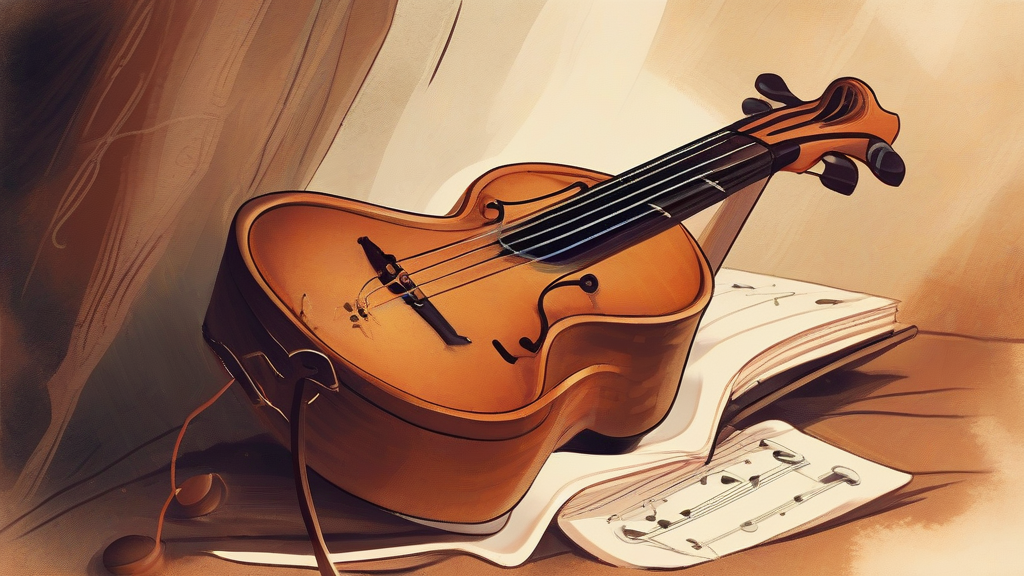
What does crwth mean?
A crwth is an ancient Celtic stringed instrument, most closely identified with Wales, where it was played by bards into the early modern period. Resembling a small rectangular lyre, it was typically held against the shoulder and could be plucked or bowed. The word comes from Welsh, where it simply means the instrument itself, and it entered English through descriptions of Welsh musical life. Today 'crwth' survives mainly in two settings: scholarly and revivalist contexts, where early-music enthusiasts reconstruct and perform on the instrument, and word games, where its unusual letter combination — including the rare 'w' as a vowel-bearing letter — makes it valuable despite its obscurity. Its rarity gives it a distinctly literary, archaic flavor whenever it appears. For anyone interested in Celtic heritage or the history of European instruments, the crwth offers a direct link to the bardic culture that preserved much of Wales's earliest poetry and song.
nounA crwth is an ancient Celtic stringed instrument of the harp-lyre family, historically played in Wales and associated especially with Welsh bardic tradition.
- An ancient Celtic stringed instrument resembling a lyre, played especially in Wales.
"The museum's collection includes a beautifully preserved crwth once played by Welsh bards."
"At the eisteddfod, a musician demonstrated how the crwth was held against the shoulder and plucked with a bow and fingers."
"Medieval manuscripts describe bards accompanying their recitations on the crwth."
In English the plural is normally formed regularly as 'crwths'; the Welsh plural 'crwthau' may appear in Welsh-language texts.
"Only a handful of original crwths survive in museum collections."
The crwth is so obscure that it famously ranks among the highest-scoring playable words in Scrabble — and unlike most such words, it names a real, ancient instrument you can still hear today.
Reviewed by Deb Chak, Editor. AI-assisted content curated by RJS Tech Solutions LLP.
Etymology of crwth
The word crwth comes directly from Welsh, in which it is the native name for the instrument; the Welsh form is ancient, reflecting a Celtic root also seen in Irish 'cruit', meaning harp. English borrowed it in the sixteenth century through accounts of Welsh life and music. The same Germanic-influenced lineage produced the medieval English word 'crowd' (also spelled 'croude'), a bowed string instrument related to the crwth, which later gave rise to the fiddle family's terminology.
How crwth is actually used
A rare word known chiefly from musicology, Welsh cultural history, and word games; in everyday speech it appears almost exclusively when discussing early music or Welsh tradition. It is sometimes used figuratively to evoke archaic or bardic antiquity.
Easily confused with crwth
Crowd is both a common noun for a large gathering of people and a historical name for a medieval bowed string instrument closely related to the crwth, whereas a crwth is specifically the plucked Celtic lyre of Wales.