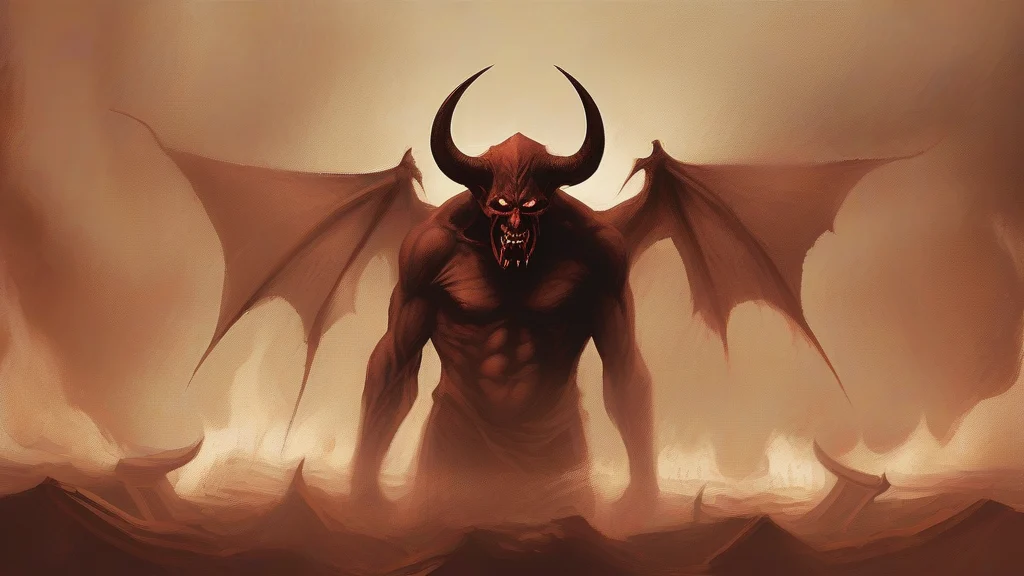
What does demoniacal mean?
Demoniacal is an adjective used to describe something having the character of a demon or devil — fiendish, malevolent, or wildly frenzied. It appears most often in literary and formal writing, where it intensifies descriptions of laughter, rage, violence, or possession. A villain might give a demoniacal grin, or a storm might strike with demoniacal fury. The word carries heavy negative connotations, evoking both supernatural evil and terrifying loss of control. Historically it was also applied to states believed to involve actual demonic possession, particularly in religious contexts. In modern usage it has largely been displaced by its shorter synonym 'demonic', though 'demoniacal' retains a slightly more archaic, gothic flavour that suits horror fiction and dramatic narration. Related forms include the adverb 'demoniacally' and the rarer adjective 'demoniac'. Writers who want an elevated, old-fashioned register of menace will find 'demoniacal' a precise and evocative choice over more ordinary alternatives like 'evil' or 'cruel'.
adjectiveHaving the qualities of a demon or devil; fiendish or frenziedly violent. Also used to describe something suggestive of demonic possession.
- Suggestive of a demon or devil; fiendishly wicked or malevolent.
- Characterized by frenzied, uncontrollable violence or energy as if driven by a demon.
"The storm battered the coast with demoniacal fury, tearing roofs from houses in minutes."
"He let out a demoniacal laugh that echoed through the empty corridor."
"The villagers described the possessed woman's convulsions as demoniacal in their violence."
Before psychiatrists had words for mental illness, writers reached for 'demoniacal' — for centuries, madness and evil were thought to share a single name.
Reviewed by Deb Chak, Editor. AI-assisted content curated by RJS Tech Solutions LLP.
Etymology of demoniacal
Demoniacal derives from Latin 'daemoniacus', itself borrowed from Greek 'daimoniakos', meaning 'possessed by a spirit', from 'daimonion' (a lesser deity or spirit). Greek 'daimon' originally denoted any divine power or guiding spirit, but under Judeo-Christian influence came to mean an evil spirit. The word entered English in the early modern period, alongside related forms such as 'demonic' and 'demoniac'. Its Greek root also underlies words like 'pandemonium', coined by Milton in the 17th century.
Related word forms
How demoniacal is actually used
Formal or literary in register; more common in older texts than in contemporary prose. Carries strong negative connotations of evil or uncontrolled frenzy. 'Demonic' is now the far more common variant.
Easily confused with demoniacal
'Maniacal' means frenzied or insane like a maniac, while 'demoniacal' specifically means fiendish or devil-like; they overlap only when describing wild laughter.