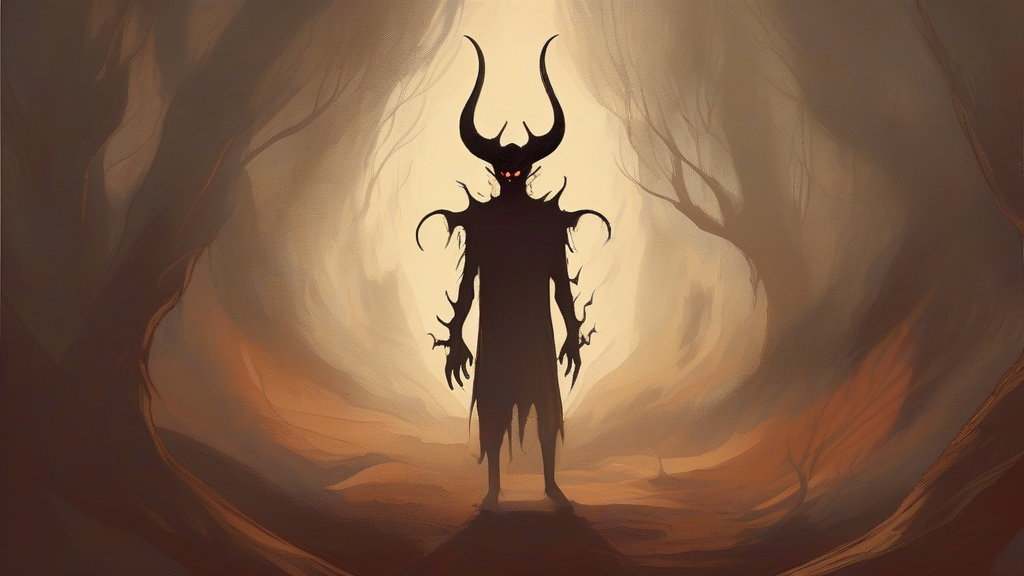
What does demon mean?
A demon is an evil spirit or devil, conceived in many religious traditions, folklores, and works of fiction as a malevolent supernatural being capable of tempting, tormenting, or possessing human beings. Beyond this literal sense, the word has taken on a rich figurative life: people speak of battling their "inner demons" when struggling with addiction, guilt, anxiety, or other persistent personal afflictions, making the term a common shorthand for psychological turmoil. Informally, calling someone a demon — as in a "speed demon" on the racetrack or a "demon" on the tennis court — suggests ferocious energy, relentlessness, or exceptional skill, a usage that is admiring rather than sinister. Derived forms include the adjective "demonic," the verbs "demonize" and "possess," and nouns like "demonology," the study of demons. The word derives from the Greek "daimon," which originally denoted a spirit or divine power of either character, and acquired its overwhelmingly negative sense through later religious interpretation.
An evil spirit or devil, especially one that tempts, torments, or possesses humans.
"The exorcist claimed the house was infested with demons."
A persistent inner compulsion or source of mental anguish; often used in the plural.
"Even after decades of success, his old demons still haunted him."
(Informal) A person who is extremely energetic, fierce, or skilled at something.
"She's a demon on the squash court — nobody can keep up with her."
Standard regular plural. The plural form is especially common in the figurative sense of personal struggles, where "demons" is nearly always preferred over the singular.
"Every hero in these stories must confront their own demons."
The word "demon" comes from the Greek "daimon," which originally meant a guiding spirit or divine power — the evil meaning only emerged when Christianity reinterpreted pagan spirits as malevolent.
Reviewed by Deb Chak, Editor. AI-assisted content curated by RJS Tech Solutions LLP.
Etymology of demon
Demon comes from the Latin "daemon," borrowed from the Greek "daimon," which originally meant a deity, fate, or guiding spirit without inherently negative connotations — the related Greek term "eudaimonia" means happiness or flourishing, literally "good-spiritedness." The word entered English in the early modern period, around the 16th century, largely through translations of the Bible and writings on witchcraft, by which time Christian theology had recast pagan spirits as agents of evil. Related English words include "pandemonium," coined by John Milton in "Paradise Lost" as the name of the capital of Hell, and "demonology," the study of demons.
Related word forms
How demon is actually used
In religious and literary contexts, "demon" carries strong connotations of evil and possession. In informal modern usage, the plural "demons" frequently refers metaphorically to personal struggles such as addiction, guilt, or trauma, as in "battling one's demons." As a modifier, "demon" can be complimentary in phrases like "speed demon" or "a demon worker," implying ferocious energy rather than evil.
Easily confused with demon
"Daemon" is an alternative classical spelling of demon, but in modern usage it specifically refers to a background process running on a computer system.