What does dill mean?
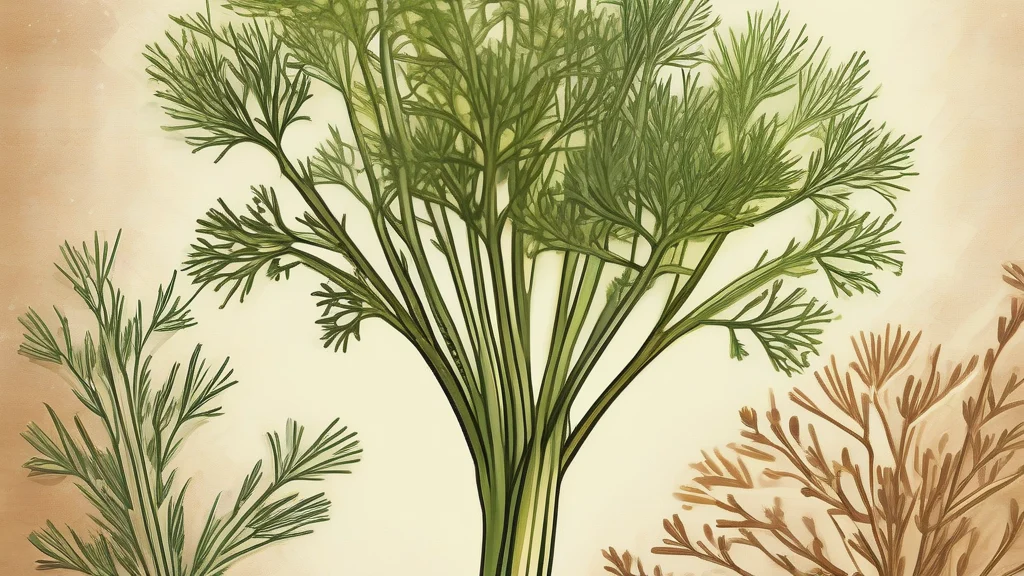
Dill is an aromatic annual herb belonging to the parsley family, valued for both its delicate, feathery green leaves and its small, flavorful seeds. Native to regions spanning southern Europe, western Asia, and parts of Africa, it has been cultivated as a culinary and medicinal plant since antiquity. In the kitchen, the leaves — sometimes called dill weed — lend a fresh, slightly grassy, anise-like flavor to fish dishes, sauces, salads, and especially pickles, while the stronger-tasting seeds are used in breads, spice blends, and pickling brines. The word functions primarily as an uncountable noun for the herb or seasoning itself, though it can refer to an individual plant when counted. Dill carries warm, homey connotations, evoking traditional European cooking and summer gardens. Its long history of human use — from Egyptian medical papyri to modern Scandinavian cuisine — makes it one of the most enduring herbs in the Western culinary tradition.
nounAn aromatic annual herb of the parsley family, with feathery leaves and seeds used to flavor food; also the leaves or seeds of this plant used as a culinary seasoning.
- The annual herb Anethum graveolens of the parsley family, with fine feathery leaves and aromatic seeds.
- The fresh or dried leaves of this plant, used as a herb to season dishes such as fish, pickles, and sauces.
- The small, flat, oval seeds of this plant, used whole or ground as a spice (also called dill seed).
"She sprinkled fresh dill over the poached salmon just before serving."
"Add a few sprigs of fresh dill to the cucumber salad for a bright, grassy note."
"Bread-and-butter pickles get their distinctive tang from a brine flavored with mustard seed and dill."
'Dills' is rare and typically refers only to individual plants in a garden or field, or occasionally to jars of dill pickles in informal speech. When referring to the herb as a culinary ingredient, it is treated as uncountable.
"She planted several dills along the sunny edge of the vegetable bed."
Dill has been flavoring food for at least 5,000 years — ancient Egyptian physicians prescribed it, and Roman gladiators were said to be rubbed with it before battle.
Reviewed by Deb Chak, Editor. AI-assisted content curated by RJS Tech Solutions LLP.
Etymology of dill
Dill comes from Old English dile, a word of uncertain ultimate origin that has cognates in other Germanic languages such as Old High German tilli and Norwegian dil(l)a. Some scholars have suggested a possible link to the verb meaning 'to soothe,' reflecting the plant's traditional use as a calming remedy, though this connection remains speculative. The word has been part of English continuously since the earliest recorded stages of the language, making it one of the older native plant names rather than a later borrowing from Latin or French.
How dill is actually used
In cooking contexts, cooks often specify 'dill weed' for the leaves versus 'dill seed' for the spice, since the two have noticeably different flavors. The word is uncountable when referring to the herb or seasoning in general, but countable ('a dill') when referring to an individual plant. In North American English, 'dill' is strongly associated with pickles, while Scandinavian, Eastern European, and Russian cuisines use it far more broadly with fish, potatoes, and soups.
Easily confused with dill
Dillweed refers specifically to the feathery green leaves of the dill plant, whereas 'dill' can refer to the whole herb or its seeds.