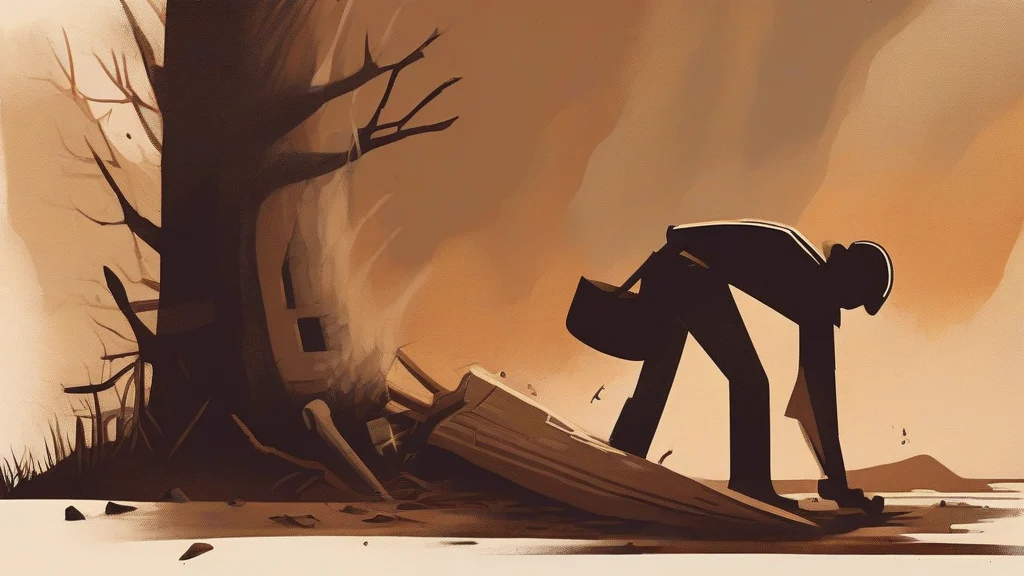
What does disinterring mean?
"Disinterring" is the present participle and gerund of the verb "disinter," meaning to dig up or remove something — most often a body — from the earth. Its literal use appears chiefly in legal, forensic, and archaeological contexts, as when courts authorize disinterring remains for DNA testing or when excavators uncover ancient burial sites. By extension, the word carries a vivid figurative sense: to unearth information, documents, scandals, or memories that have been forgotten or deliberately concealed, as in "disinterring the truth." Because its root is the Latin terra (earth), disinterring literally means drawing something back out of the ground, which makes the metaphor especially apt. The figurative usage can carry a faintly disapproving tone, suggesting the revival of matters better left buried. Related forms include disinter, disinterred, and the noun disinterment. The word belongs to formal register and pairs naturally with terms like evidence, remains, records, and secrets.
verbThe present participle of 'disinter': digging up or removing something, especially a corpse, from the ground; also used figuratively to mean unearthing or bringing to light something forgotten or obscure.
- To dig up or remove from the ground, especially human remains (literal sense)
- To unearth, revive, or bring to public attention something long forgotten or deliberately hidden (figurative sense)
"Archaeologists spent the summer carefully disinterring the remains of an Anglo-Saxon settlement beneath the churchyard."
"A court order finally permitted investigators to begin disinterring the grave in search of DNA evidence."
"The journalist made a career of disinterring political scandals that others had buried decades ago."
From Latin 'terra' (earth), to disinter something is literally to pull it back out of the earth — whether a coffin after 200 years or a scandal someone hoped was safely buried.
Reviewed by Deb Chak, Editor. AI-assisted content curated by RJS Tech Solutions LLP.
Etymology of disinterring
"Disinter" was formed in English in the early 17th century from the prefix dis- (expressing reversal or removal) combined with the verb "inter," meaning to place in the ground or bury, which itself derives from Latin inter (within). The ultimate root is the Latin noun terra, meaning earth or land, a highly productive element visible in English words such as terrain, territory, and subterranean. Thus disinterring literally means taking out of the earth.
Related word forms
How disinterring is actually used
Formal to neutral register; common in journalism, legal contexts (exhumation orders), and archaeology. The figurative use often carries a slightly critical connotation, implying someone is raking up matters best left alone.
Easily confused with disinterring
'Disintegrating' means breaking apart into pieces or losing cohesion, while 'disinterring' means digging something up out of the ground.