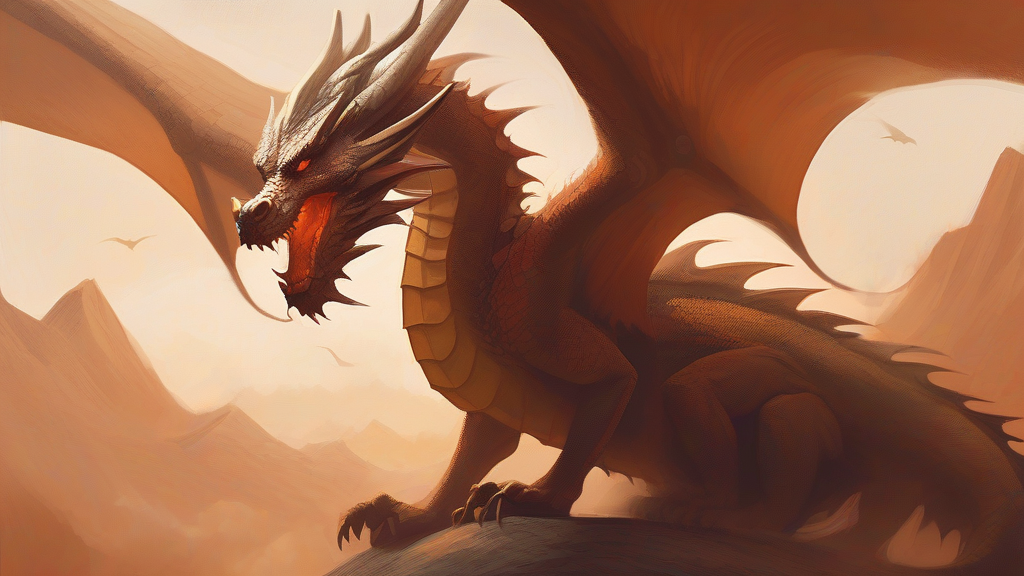
What does dragon mean?
A dragon is a legendary creature found in the mythologies of nearly every culture: a monstrous reptile, often enormous, frequently winged and capable of breathing fire. In Western European tradition, dragons are typically malevolent beasts guarding treasure and terrorizing communities, vanquished by heroes such as St George or Beowulf. In Chinese and other East Asian cultures, by contrast, the dragon is a benevolent emblem of imperial power, rain, prosperity, and good luck, celebrated rather than slain. Beyond mythology, English uses 'dragon' figuratively to describe a fierce, intimidating person — historically, especially a strict female chaperone. The word derives from Greek 'drakōn', originally suggesting a watchful serpent. Dragons remain central to fantasy literature, film, and games, making the word instantly recognizable and richly symbolic of both danger and majesty.
nounA mythical monster resembling a giant reptile, typically winged, fire-breathing, and fearsome; in European tradition it is usually malevolent, while in East Asian traditions it is often a benevolent symbol of power and good fortune. Also used figuratively for a fierce, intimidating, or dangerous person.
- A mythical giant reptilian monster, often winged and fire-breathing.
- A fierce, formidable, or intimidating person (figurative).
- (Informal, chiefly British) A domineering or fierce older woman, especially one acting as a chaperone.
"The knight set out at dawn to slay the dragon that terrorized the village."
"Legends tell of a dragon that guarded its hoard of gold deep beneath the mountain."
"The new manager turned out to be a real dragon who brooked no lateness from anyone."
Regular plural; standard in both British and American English.
"Chinese New Year celebrations feature dancers parading through the streets with long dragons made of silk and bamboo."
The word 'dragon' comes from the Greek 'drakōn', meaning 'one who watches' — so every dragon in legend was, etymologically, a guardian.
Reviewed by Deb Chak, Editor. AI-assisted content curated by RJS Tech Solutions LLP.
Etymology of dragon
The English word 'dragon' entered Middle English around the 13th century from Old French 'dragon', which came from Latin 'dracōn-', itself borrowed from Greek 'drakōn' ('serpent, giant sea-fish'), derived from the Greek verb 'derkesthai', meaning 'to see clearly' or 'to watch'. The original sense of the Greek word thus emphasized the creature's sharp sight or vigilant watching. Related words include 'draconian', from the Athenian lawgiver Draco, whose name carried the same root.
How dragon is actually used
The word is neutral to positive when referring to mythology, folklore, or fantasy fiction, but carries negative connotations when applied figuratively to people. In British informal usage, 'dragon' for an overbearing woman is somewhat dated and can be considered sexist if used carelessly.
Easily confused with dragon
A dragoon is a historical mounted infantry soldier, whereas a dragon is the mythical reptilian creature — the two words share a root but mean entirely different things.