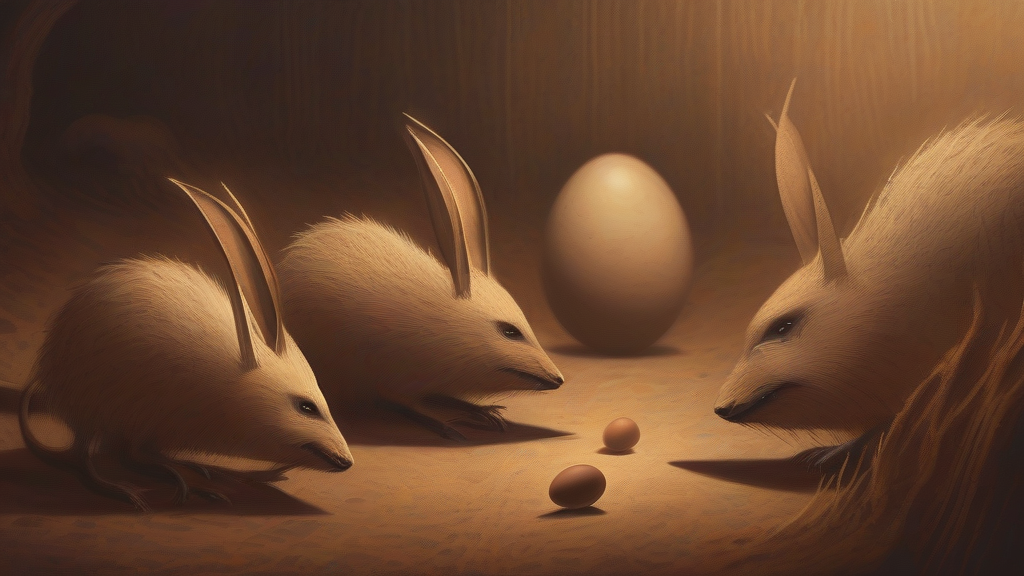
What does echidnae mean?
Echidnae is simply the plural of echidna, naming one of the most unusual groups of mammals on Earth. Native to Australia and New Guinea, echidnae are covered in sharp spines like hedgehogs, but they are actually monotremes — egg-laying mammals, making them relatives of the platypus and members of an ancient lineage. They feed on ants and termites using long, sticky tongues and powerful digging claws, and they range from the widespread short-beaked species to rarer long-beaked species in New Guinea. In usage, "echidnae" is the classical plural form; "echidnas" is more common in everyday English. The word carries no strong connotations beyond its natural-history associations, appearing chiefly in zoology, conservation, and travel or documentary writing about Australian wildlife.
nounPlural of echidna: egg-laying mammals of Australasia that have spiny coats, long snouts, and sticky tongues for feeding on ants and termites.
- The plural of echidna: any of several spine-covered, insect-eating egg-laying mammals (monotremes) native to Australia and New Guinea.
"The sanctuary cares for several injured echidnae found along the forest roads each summer."
"Volunteers rescued two orphaned echidnae after the bushfire swept through the national park."
"In New Guinea's highlands, researchers have documented long-beaked echidnae at elevations above 4,000 metres."
Both plurals are correct. "Echidnas" dominates in everyday and journalistic English, while "echidnae" preserves the Latin-style plural and appears more often in formal or scientific writing.
"Several echidnae were spotted foraging near the creek at dawn."
Alongside the platypus, echidnae are among the only mammals on Earth that lay eggs — and they've been laying them for tens of millions of years.
Reviewed by Deb Chak, Editor. AI-assisted content curated by RJS Tech Solutions LLP.
Etymology of echidnae
The word comes from New Latin "Echidna", the genus name coined in the late eighteenth century, which was borrowed from Greek "ekhidna", meaning "viper" or adder — the name of the half-woman, half-serpent monster of Greek mythology who was mother of many famous beasts. The underlying Greek root relates to snakes and spiny creatures, and it also gives us scientific terms such as "echinate" (spiny) and "echinoderm". The plural "echidnae" follows the Latin second-declension pattern, though "echidnas" has largely displaced it in modern English.
Related word forms
How echidnae is actually used
"Echidnae" is the classical Latin-style plural of "echidna"; "echidnas" is equally standard and far more common in everyday use. The word is formal-to-neutral in register and appears mostly in zoological writing, nature documentaries, and conservation contexts.
Easily confused with echidnae
Echidnae are spiny egg-laying mammals of Australia and New Guinea, whereas hyenas are carnivorous African mammals; the words merely sound faintly similar in their endings.