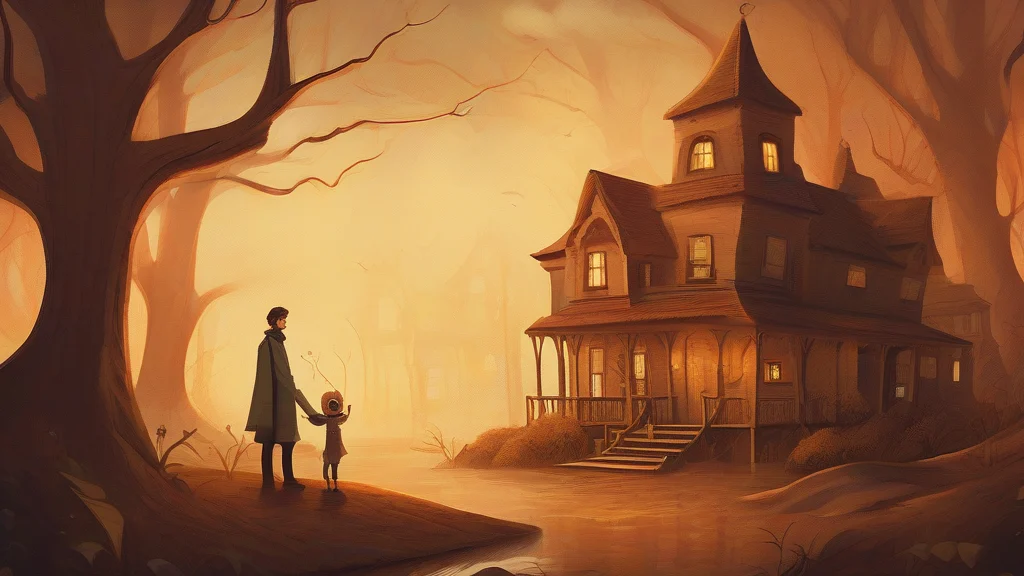
What does fantasticality mean?
Fantasticality is the abstract noun denoting the quality of being fantastical: wildly imaginative, whimsical, or detached from ordinary reality. It names both a general character — the dreamlike inventiveness that pervades a story, painting, or design — and particular instances of it, such as an episode or image of striking unreality. Derived from the same Greek root as 'fantasy', via Latin and late-medieval usage, it entered English in the early modern period alongside words like 'fantastical' and has always remained a literary and somewhat formal term. Writers reach for it when they want to discuss imagination as a property rather than an event: critics may praise the 'sheer fantasticality' of magical-realist fiction, or condemn a work for sacrificing coherence to it. Because it carries this evaluative flexibility — celebrating invention while also implying estrangement from the real — fantasticality is a precise, useful word for literary discussion, even though everyday conversation more often settles for 'fantasy' or 'whimsy'.
nounThe quality or state of being fantastical; something characterized by extravagant, whimsical, or unreal imagination.
- The quality or condition of being fantastical — extravagantly imaginative, whimsical, or removed from reality.
- A specific instance or manifestation of the fantastical, such as an episode, image, or feature marked by wild invention.
"The novel's fantasticality — its talking animals and floating cities — delighted younger readers but unsettled the critics."
"Readers surrendered to the sheer fantasticality of a city that rearranged itself each night."
"Critics faulted the film for trading emotional truth for pure fantasticality."
The plural refers to multiple distinct instances or manifestations of the fantastical, rather than degrees of the general quality.
"The manuscript abounds in fantasticalities — winged messengers, prophetic dreams, impossible cities."
"Fantasticality" is what happens when a whole adjective gets promoted into an abstract noun — the quality of being unreal, bottled and labeled.
Reviewed by Deb Chak, Editor. AI-assisted content curated by RJS Tech Solutions LLP.
Etymology of fantasticality
Fantasticality traces to the Greek 'phantastikos' and 'phantasia' (appearance, imagination), transmitted through Latin 'phantasticus' into the Romance languages and English. Its immediate source is 'fantastical', the adjective meaning given to fancy or imagination, from which the abstract noun was formed with the '-ity' suffix common to Latin-derived qualities. Words sharing this lineage include 'fantasy', 'phantasm', and 'fancy'.
Related word forms
How fantasticality is actually used
Formal and literary in register; rare in everyday speech, where speakers prefer 'fantasy' or 'whimsy'. Often used evaluatively — either as praise for imaginative richness or criticism of excess and implausibility. The plural 'fantasticalities' refers to multiple instances.
Easily confused with fantasticality
Fantastical is an adjective describing something as fanciful or unreal, while fantasticality is a noun referring to the quality of being so.