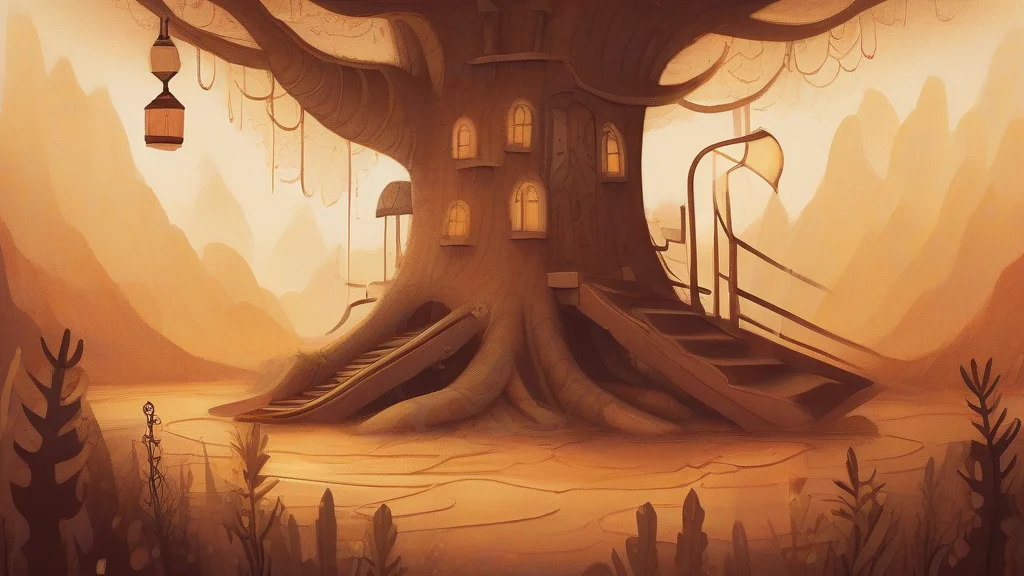
What does fantasticalness mean?
Fantasticalness is the noun denoting the quality of being fantastical — that is, markedly imaginative, whimsical, or estranged from everyday reality. It names the property one perceives in a dreamlike painting, a fairy-tale landscape, or a story peopled by talking animals: the degree to which invention has carried the work beyond the plausible. The word is uncommon in modern usage; it belongs to a family of abstract nouns formed with the '-ness' suffix from adjectives describing character or style, and it appears most often in literary criticism and descriptive prose. Its connotations are usually positive, signaling admiration for creative boldness, though it can serve as a neutral observation that something departs from realism. Readers who encounter it should note that the more widely recognized term 'fantasticality' expresses essentially the same idea, and that both derive from 'fantastic,' a word rooted in the Greek notion of what exists only in appearance or imagination.
nounThe quality or state of being fantastical; the degree to which something is whimsical, imaginative, or wildly removed from reality.
- The quality of being fantastical — strikingly imaginative, whimsical, or divorced from reality.
"The fantasticalness of the novel's floating cities made ordinary plot concerns feel almost beside the point."
"Critics admired the film's sheer fantasticalness, its willingness to abandon realism entirely."
"Even jaded readers were struck by the fantasticalness of the manuscript's imagined world."
'Fantastic' once meant existing only in imagination — so calling a painting full of 'fantasticalness' is, etymologically speaking, praising its skillful unrealness.
Reviewed by Deb Chak, Editor. AI-assisted content curated by RJS Tech Solutions LLP.
Etymology of fantasticalness
Fantasticalness is formed from 'fantastical,' the adjective derived from 'fantastic,' which entered English in the medieval period via French from Greek 'phantastikos,' meaning able to create mental images — itself from 'phantazein,' to make visible or apparent. The Greek root thus originally concerned things appearing to the mind rather than to the eye, which explains why 'fantastic' long carried the sense of existing only in imagination. The '-ness' suffix, of Germanic origin, was applied to produce an abstract noun naming this quality as a whole.
Related word forms
How fantasticalness is actually used
This is a rare, somewhat literary word; writers more often reach for 'fantasticality' or simply describe the thing as 'fantastical.' It carries a broadly positive, appreciative connotation when praising art and literature, but can be neutral or mildly critical when pointing out that an account strains credulity.
Easily confused with fantasticalness
Fantasticality is the more established and formal term for the same quality of being fantastical, while fantasticalness is a rarer, more plainly constructed variant.
Fancifulness suggests playful invention within the bounds of plausibility, whereas fantasticalness implies a far wilder departure from reality.