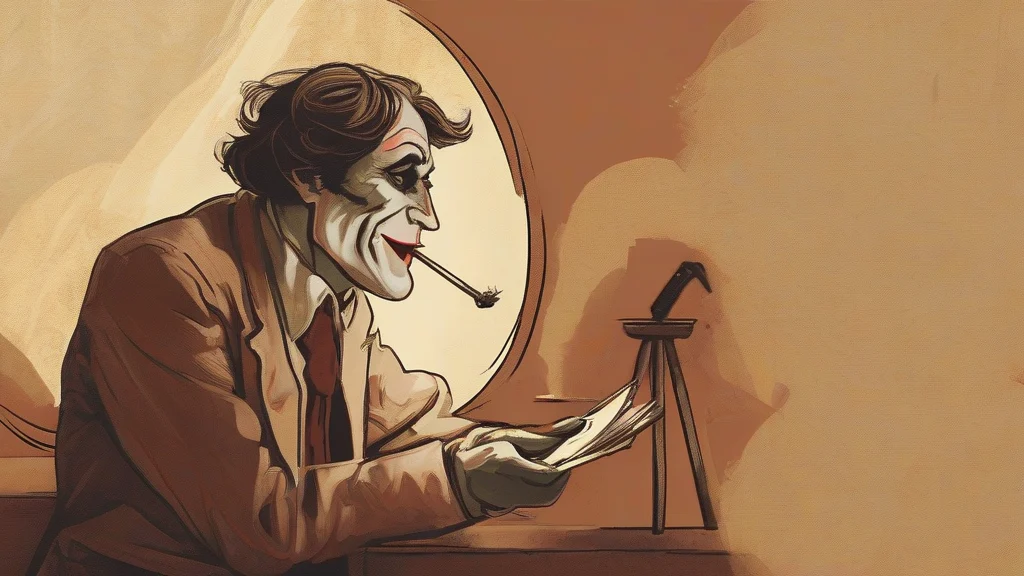
What does farceur mean?
A farceur is someone who makes farce: a writer, actor, or inveterate joker devoted to broad, absurd comedy and elaborate practical joking. The term comes directly from French, where 'farceur' means a joker or prankster, and English borrowed it in the nineteenth century for use chiefly in theatrical criticism and literary description. In its most common modern sense, a farceur is the author or performer behind a farce — the frantic comedy of mistaken identities, slamming doors, and escalating absurdity — while in everyday usage it can describe any habitual prankster whose humor runs toward the ridiculous. The word carries a warm, appreciative tone: to call someone a farceur is usually to praise their comic gifts, not to scold them, though it can hint that the person refuses to take anything seriously. It remains a somewhat literary word, appearing most often in reviews of theatre and discussions of comic tradition.
nounA person who writes, performs in, or is given to farce; a habitual joker or practical joker who delights in absurd comedy.
- A writer or performer of farce; an actor or author specializing in broad, absurd comedy.
- A person given to joking, pranks, or buffoonish behavior in everyday life.
"The playwright proved himself a masterful farceur, cramming three mistaken identities and a collapsing soufflé into a single act."
"Critics hailed the young director as the finest farceur to emerge from the Paris stage in a generation."
"An incorrigible farceur even at board meetings, he could turn a budget review into improvised theater."
The plural simply adds -s; the word is occasionally left unitalicized as fully naturalized in English.
"The festival gathered farceurs from three continents for a week of gloriously improbable comedy."
'Farceur' smuggles the French love of stuffing — the word traces back to 'farce', which cooks once used literally for meat packed with forcemeat before it ever meant a ridiculous comedy.
Reviewed by Deb Chak, Editor. AI-assisted content curated by RJS Tech Solutions LLP.
Etymology of farceur
Farceur derives from French 'farceur', meaning a joker or maker of farce, formed from the verb 'farcer' and ultimately from 'farce'. Farce itself entered French from Latin 'farcire', meaning 'to stuff' or 'to pad out', because early comic interludes were said to be stuffed into religious plays as filler — the same Latin root gave culinary 'forcemeat' and the dish known as 'farci'. English adopted the word in the nineteenth century alongside its parent terms 'farce' and 'farcical'.
How farceur is actually used
The word retains a distinctly French flavor and is often italicized or used in arts writing about theatre; it carries an affectionate, sometimes wry connotation rather than a critical one.
Easily confused with farceur
A farce is the comedic work or situation itself, while a farceur is the person who creates, performs, or instigates such comedy.