
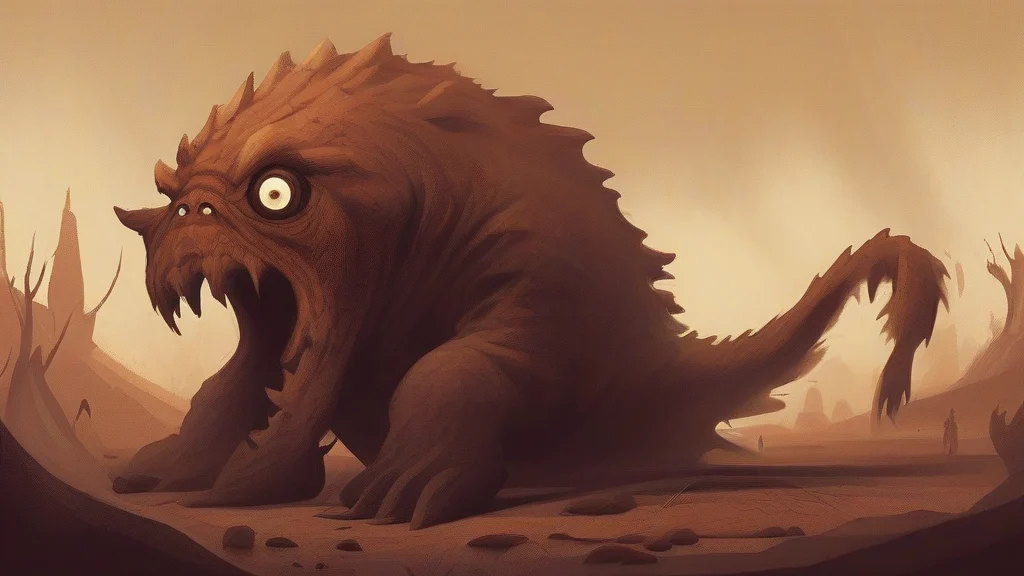
What does monstrousness mean?
Monstrousness is a formal noun meaning the quality or condition of being monstrous. In its principal sense, it describes something so grotesque, cruel, hideous, or terrible that it evokes horror or moral outrage. The word is often used in discussions of human behavior, suffering, conflict, and wrongdoing, as in references to the monstrousness of human cruelty or a crime. A secondary sense describes extreme magnitude, such as the monstrousness of a building or landscape. Although it is closely related to monstrosity, monstrousness focuses more on an abstract quality or condition, while monstrosity often denotes a particular monstrous person, thing, or act. Because of its evaluative force, monstrousness is generally literary, journalistic, or formal rather than everyday.
The quality or state of being monstrous, especially in a grotesque, hideous, cruel, or excessively terrible form.
"The writer used literature to confront the monstrousness of oppression."
Formal and strongly evaluative; often used in literary, journalistic, or academic contexts.
The overwhelming magnitude or enormity of something.
"The monstrousness of the mountain range overwhelmed the explorers."
This is a less common and more literary sense than the moral or grotesque meaning.
Monstrousness is what happens when the adjective monstrous becomes a subject in its own right: a quality, a condition, and often a moral judgment.
Reviewed by Deb Chak, Editor. AI-assisted content curated by RJS Tech Solutions LLP.
Where does monstrousness come from?
Monstrousness is derived from the adjective monstrous, which comes from monster. The word monster derives through Old French from Latin monstrum, a term associated with an unnatural portent or abnormality. Over time, the semantic range developed toward meanings involving hideousness, cruelty, and abnormality, while the modern adjective can also indicate something extremely large. The noun monstrousness preserves the abstract sense of the quality represented by monstrous.
Related word forms
How monstrousness is actually used
The word is formal and strongly evaluative. It is most often used for something perceived as extremely cruel, grotesque, or terrible, though it can also emphasize extreme size or scale.
Easily confused with monstrousness
Monstrosity more often names a monstrous being, thing, or act, whereas monstrousness usually refers to the abstract quality or condition of being monstrous.