
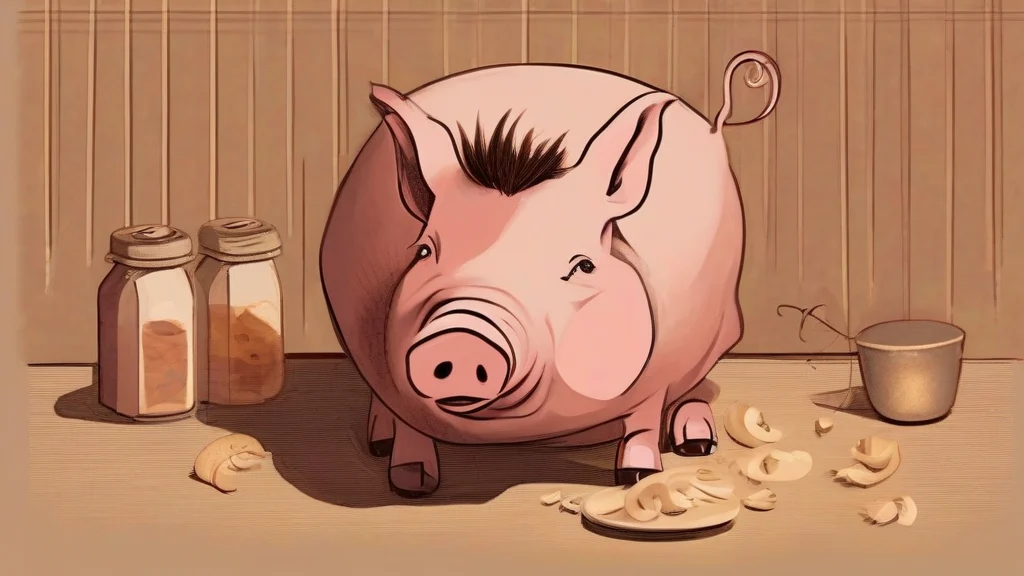
What does piggishness mean?
Piggishness is an English noun denoting qualities conventionally associated with pigs, especially greedy appetite and messy, inconsiderate eating. In literal descriptions it can mean voraciousness at a meal or behavior that makes eating seem crude and selfish. The word also has a figurative sense: a miserly, mean, or ill-tempered disposition, especially in someone who refuses to share or begrudges others their due. Its force is strongly derogatory rather than playful, though literature and satire may use it humorously. Piggishness is formed from “piggish” plus the noun-forming suffix “-ness,” linking it etymologically to “pig.” The word is relatively uncommon compared with “greed,” “gluttony,” or “meanness,” but it is vivid because it compresses a judgment about both appetite and manners into a single label. It is most useful when describing conspicuous behavior that combines self-interest with lack of consideration for others.
nounThe quality of being piggish: greedy or voracious in appetite, especially in a way marked by messy or inconsiderate eating. Figuratively, it refers to selfish, miserly, or mean-spirited behavior.
- Greedy or voracious appetite, especially when displayed in an excessive or selfish way.
- Messy, greedy, or inconsiderate eating habits.
- A miserly, mean, or selfish disposition.
"His piggishness at the buffet embarrassed everyone."
"His piggishness at the buffet embarrassed everyone."
"Her piggishness in refusing to share the last slice revealed a meaner side."
Piggishness is normally an abstract, uncountable noun and has no regular plural form.
"The evening exposed more than one guest's piggishness."
Built from pig, -ish, and -ness, piggishness turns swine-like appetite into a sharp judgment about human behavior.
Reviewed by Deb Chak, Editor. AI-assisted content curated by RJS Tech Solutions LLP.
Etymology of piggishness
Piggishness is an English noun formed from piggish plus the suffix “-ness.” Piggish combines the word “pig” with “-ish,” while “-ness” converts the adjective into a noun naming the associated quality. The root “pig” has also produced related English forms such as piglet, piggery, and pigskin; the word’s figurative senses developed from associations with animal appetite and eating habits.
Related word forms
How piggishness is actually used
Strongly derogatory and somewhat literary or old-fashioned. It can be used humorously in satire, but it generally expresses disapproval of greed, poor table manners, or selfish behavior.