
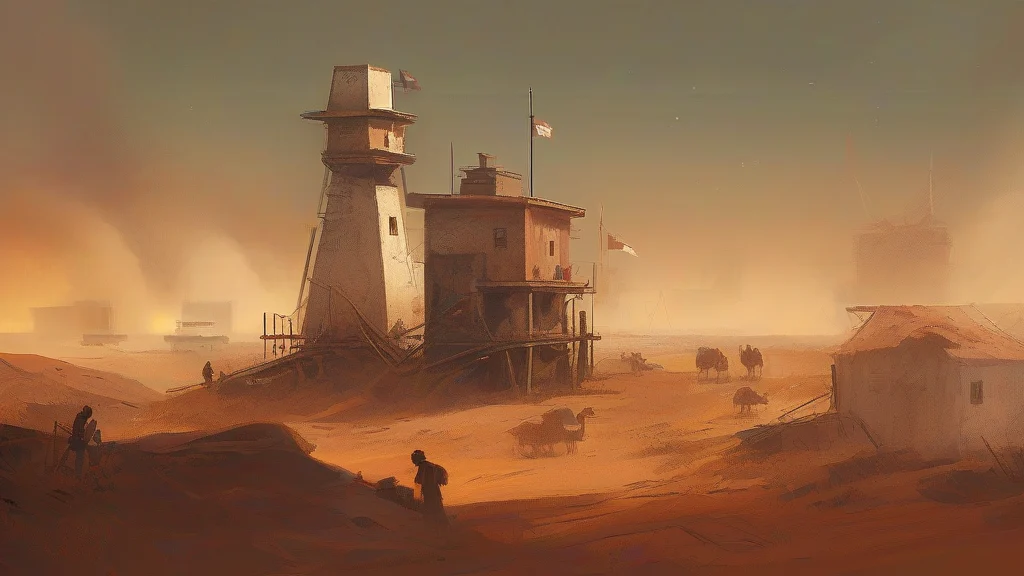
What does recolonization mean?
Recolonization means establishing a colony again after a territory has lost its original settlement, population, or controlling power. In historical and political writing, it usually describes the return of colonial rule and may carry a strongly critical connotation, since renewed colonization often involved the seizure of land, the exploitation of resources, and harm to indigenous communities. The word can therefore suggest repetition rather than simply recovery: a colonial system is revived under new circumstances. In ecology, recolonization has a more neutral specialized meaning, referring to organisms re-establishing themselves in a habitat they previously occupied. Its ordinary spelling is recolonization, while recolonisation is standard in British English. The term is especially useful when discussing the recurrence of imperial patterns, the histories of particular colonies, or the biological recovery of damaged ecosystems.
nounRecolonization is the act or process of establishing a colony again after a territory has been abandoned, depopulated, or brought under different control. In ecology, it can also refer to the re-establishment of organisms in a previously occupied habitat.
- The establishment of a colony again in a territory that had previously been colonized but has since been abandoned, depopulated, or transferred to another power.
- The re-establishment of an organism or population in a habitat from which it has temporarily disappeared.
"The arrival of European settlers was followed by the recolonization of the island and the displacement of its indigenous population."
"The treaty was followed by the rapid recolonization of the island under a new colonial administration."
"After the disturbance ended, gradual recolonization by seabirds restored the island's breeding colony."
The plural is used when distinct acts or processes of recolonization are being referred to; it is less common when the term names the process in general.
"Several recolonizations of the island followed periods of abandonment and depopulation."
Recolonization is colonization's sequel: the imperial pattern returns, often under a new power but with many of the same consequences.
Reviewed by Deb Chak, Editor. AI-assisted content curated by RJS Tech Solutions LLP.
Where does recolonization come from?
Recolonization was formed in English by adding the prefix re-, meaning “again,” to colonization. Colonization comes through French from Latin colonizare, ultimately derived from colonia, meaning a farm or settlement. The same Latin foundation produced related English forms such as colonize, colony, colonial, and colonist, while the re- prefix also gives the verb recolonize.
Related word forms
How recolonization is actually used
The word is generally formal and is often evaluative in historical contexts because renewed colonization commonly involved imperial control and dispossession. In ecology, it is a technical term for the re-establishment of a population. The spelling is chiefly American; British English usually uses recolonisation.
Easily confused with recolonization
Repopulation means people, animals, or plants return to an area, whereas recolonization usually implies the area is organized or settled as a colony again.