
What does romp mean?
To romp is to play or move about with conspicuous energy, enthusiasm, and high spirits, especially in a way that involves running, chasing, tumbling, or rough-and-tumble activity. As a noun, a romp is a single episode of such lively behaviour: children might have a romp in the hay, while puppies romp around a garden. The word is usually informal and affectionate rather than severe, though it can suggest that the activity is noisy or boisterous. It is often associated with childhood, animals, and physical play, but it can also describe adults temporarily abandoning restraint for fun. Compared with the more neutral “play,” “romp” emphasizes movement and exuberance; compared with “wrestle” or “fight,” it generally signals that the activity is good-natured rather than hostile. The word is useful for describing energetic, uninhibited moments of amusement.
A playful, energetic bout of running or boisterous activity.
"The two friends had a romp in the long grass."
Commonly used in informal contexts for the vigorous, unstructured play of children, animals, or playful adults.
To play or move about with energetic enthusiasm.
"The goats romped playfully on the hillside."
Often transitive in the sense of romping in or through a place, as in “They romped through the meadow.”
Used for separate playful episodes of activity.
"After school, the children shared stories of their afternoon romps."
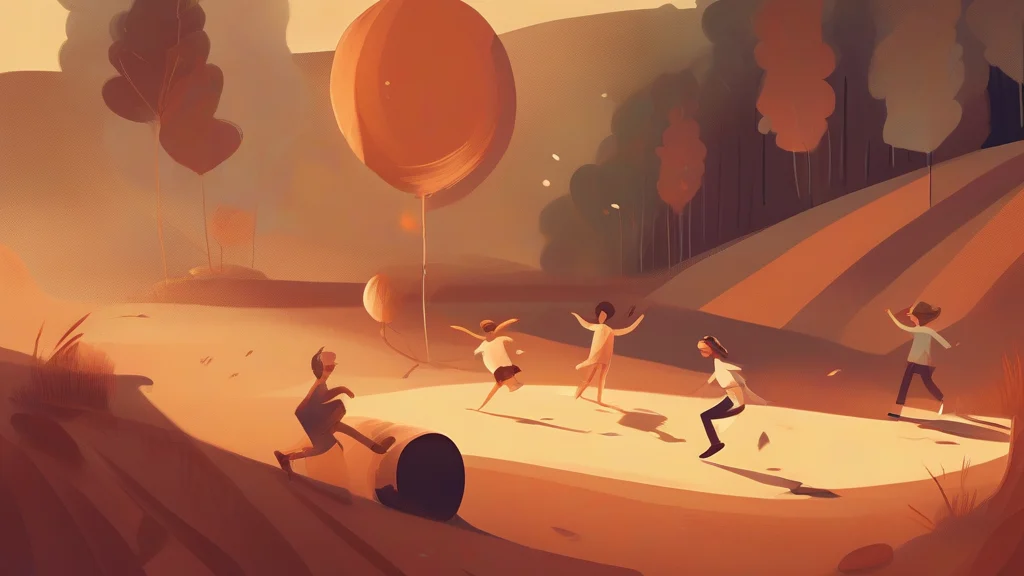
A romp is the dictionary word for the kind of childhood moment when running, laughing, and tumbling around seem to happen all at once.
Reviewed by Deb Chak, Editor. AI-assisted content curated by RJS Tech Solutions LLP.
Where does romp come from?
The word dates from the 16th century and is used for vigorous play or movement. Its precise origin is uncertain, although it has been linked to older English and continental forms connected with rushing or moving forcefully. The noun developed from the same lively sense as the verb and is now chiefly associated with playful, boisterous activity.
Related word forms
How romp is actually used
Generally informal and often used of children, animals, or groups behaving with playful high spirits. It can also describe energetic movement that is slightly rough or boisterous.
Easily confused with romp
A romp is vigorous, playful activity, whereas roaming means wandering from place to place without a fixed destination.