
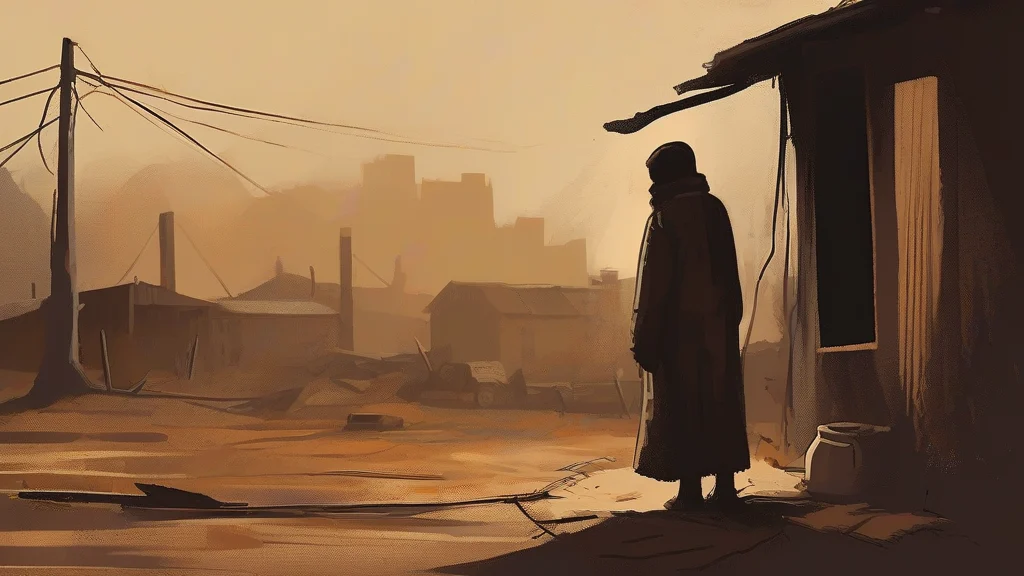
What does tatterdemalion mean?
A tatterdemalion is a person regarded as shabby, disreputable, or contemptible. The word originally described someone wearing ragged or tattered clothing, but it developed a more strongly derogatory sense: a scoundrel, ne'er-do-well, or thoroughly despicable character. Its unusual sound makes it especially memorable, and its long history gives it an eccentric, faintly comic quality even when used seriously. In modern writing it is relatively uncommon and tends to appear in literary, historical, satirical, or deliberately archaic contexts rather than in everyday conversation. Because it carries clear negative connotations, it is unsuitable for neutral description; a speaker wanting merely to note someone's ragged appearance would normally use a less loaded term. The word belongs to a family connected with tatters and tattered clothing, although its precise historical formation remains uncertain.
nounA contemptible, disreputable, or thoroughly shabby person. Historically, it could also refer simply to a person dressed in ragged or tattered clothes.
- A contemptible, disreputable, or thoroughly shabby person.
- A person dressed in ragged, tattered clothes; a shabby-looking person.
"The old woman accused the tatterdemalion of stealing food from the market."
"The novel presents him as a tatterdemalion whose reputation precedes him in every town."
"The beggar was regarded by the superstitious villagers as a tatterdemalion carrying misfortune."
The regular plural is rarely used because the word itself is uncommon.
"The play depicts a group of tatterdemalions gathered around the abandoned theatre."
A tatterdemalion may look as though the English language itself dressed the word in rags—and that is exactly what it is.
Reviewed by Deb Chak, Editor. AI-assisted content curated by RJS Tech Solutions LLP.
Where does tatterdemalion come from?
The word appears in English in the early 17th century, in forms such as tatterdemallion, and its ultimate origin is uncertain. The element tatter- is evidently suggestive of ragged clothing, but the precise development of the remainder of the word is not securely documented. Consequently, its exact formation should be treated as unsettled rather than definitively derived from a single known source.
How tatterdemalion is actually used
The word is old-fashioned and chiefly literary or humorous. It is usually insulting and can be harsher than a neutral description of someone who is merely untidy or poorly dressed.
Easily confused with tatterdemalion
Tatterdemallion is an older variant spelling of tatterdemalion and does not represent a separate meaning.