
What does waggoned mean?
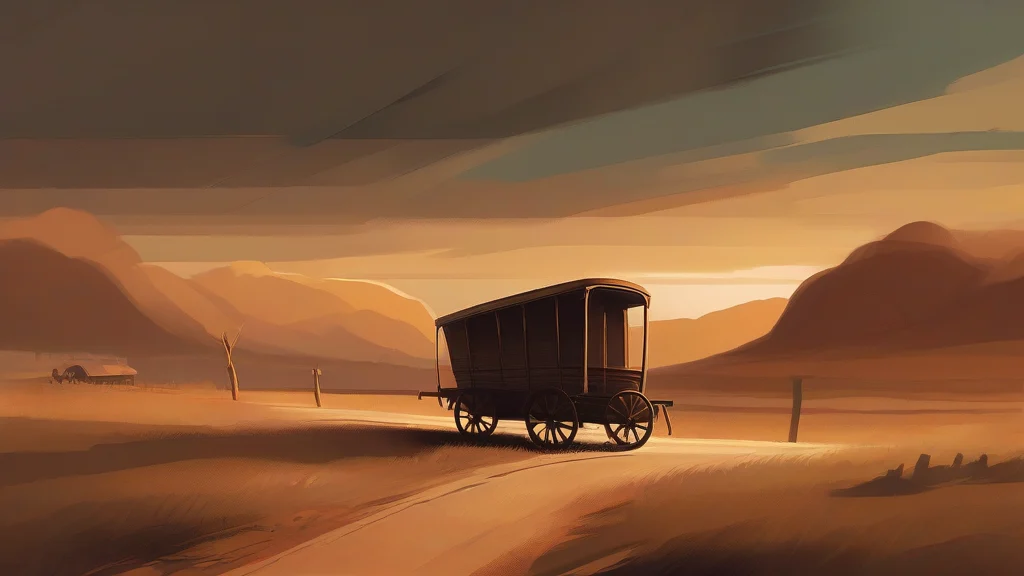
Waggoned is the past tense and past participle of waggon, an older spelling of wagon, and it describes conveying or traveling by wagon. In modern use it is chiefly literary or deliberately old-fashioned, evoking rural transport before motor vehicles became dominant. A merchant might waggon goods to market, while a family might waggon from one village to another; in both cases, people or possessions are carried in a wagon. The word is not simply a general term for transporting anything: it specifically invokes a wagon and thereby suggests wheels, loads, and slow movement. It also carries the flavor of an earlier spelling convention, particularly in British writing, whereas wagoned is standard in American English. Waggoned is therefore useful chiefly when reading older literature or recognizing intentionally period language.
verbTo convey or travel in a wagon. The word is now chiefly literary or deliberately old-fashioned.
- Conveyed or traveled in a wagon.
"The merchant waggoned his goods across the muddy road before dawn."
"The merchant waggoned his goods across the muddy road before dawn."
"In the historical novel, the family waggoned its possessions to the new farm."
Waggoned keeps the creak of wagon wheels and the romance of slow rural travel alive.
Reviewed by Deb Chak, Editor. AI-assisted content curated by RJS Tech Solutions LLP.
Etymology of waggoned
Waggoned was formed by adding the suffix -ed to waggon, a historical English spelling of wagon. Waggon entered Middle English from Old North French wagon, although its ultimate origin is uncertain. The related English forms include wagoner, wagonage, wagonload, and the modern spelling wagon.
How waggoned is actually used
The double-g spelling is associated with older and traditional British usage and can sound literary or deliberately archaic. Wagoned is the more common spelling in contemporary American English.
Easily confused with waggoned
Wagoned and waggoned are spelling variants of the same past-tense and past-participle form.