
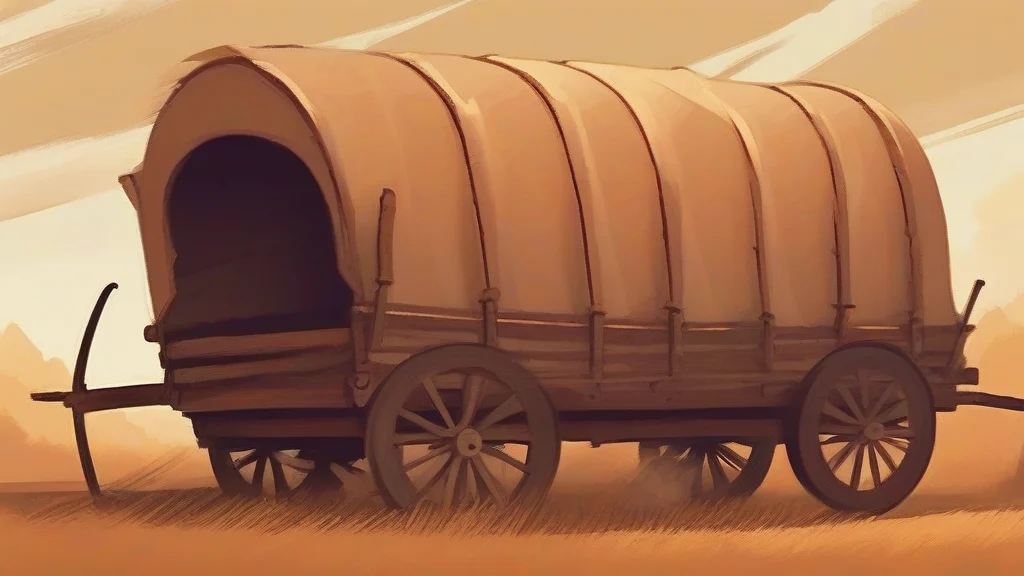
What does waggoning mean?
Waggoning is an old word for the business or practice of travelling from place to place in a wagon, usually as a pedlar or itinerant seller. It is associated with small-scale hawking rather than fixed retail: goods were carried in a wagon, sold along roads and in villages, and the seller's livelihood depended on moving between customers. The term is chiefly historical or literary and is uncommon in modern British and American English, so it can give a period or rural atmosphere to writing. As a noun, waggoning names the activity or trade itself and is normally treated as an uncountable mass noun. It can also appear as the present participle of the verb waggon, meaning to travel in or carry something by wagon. In that older context, the word is useful because it names not merely movement but a traditional form of mobile commerce. Its modern literary use may sound nostalgic and may suggest a bygone era of village markets and travelling tradesmen.
The business or practice of travelling from place to place in a wagon, especially as an itinerant seller or pedlar.
"She wrote about the hardship of earning a living by waggoning."
Normally uncountable and now chiefly historical or literary.
Travelling in or transporting something by wagon.
"The trader went waggoning along the country lanes with his wares."
Used as a participial form of the verb waggon; it is now uncommon outside historical or literary contexts.
Rare; the noun is normally used in the uncountable singular.
"The account describes the waggonings of a travelling cloth merchant."
Once, a waggoning tradesman carried his shop on four wheels.
Reviewed by Deb Chak, Editor. AI-assisted content curated by RJS Tech Solutions LLP.
Etymology of waggoning
Waggoning was formed from waggon with the present-participle and gerund suffix -ing. Waggon is a spelling variant of wagon, which entered Middle English from Dutch wagen and ultimately derives from Proto-Germanic *wagnaz, meaning “cart” or “wagon.” Related Germanic forms include German Wagen and Old Norse vagn.
How waggoning is actually used
Chiefly historical and literary in modern British and American English. The noun is normally uncountable and often carries a nostalgic or period atmosphere, evoking a bygone culture of mobile village traders.