
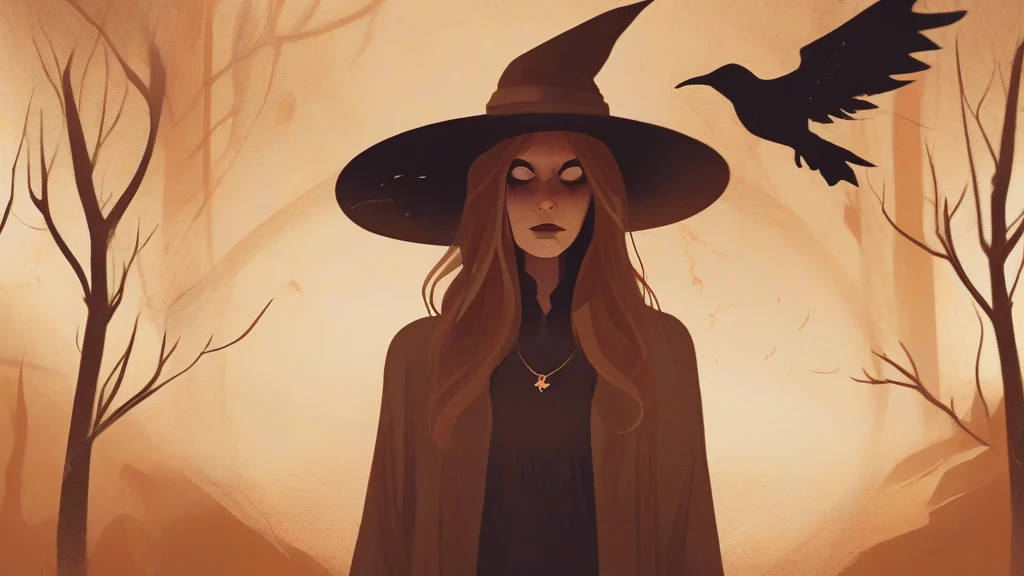
What does witchier mean?
“Witchier” is the comparative form of “witchy,” an adjective meaning witch-like, connected with witchcraft, or informally bewitching and mysteriously compelling. It describes something as having a greater concentration or degree of that quality: a “witchier” atmosphere is more uncanny or magical than another, while a “witchier” outfit has a more exaggerated, spellbinding, old-fashioned witch persona. The word can carry a light, playful or theatrical tone, especially in fashion and popular culture, while descriptions of genuinely occult subjects may use it more seriously. Because it is a comparative rather than an independent noun, “witchier” ordinarily appears with “than,” as in “witchier than the last spell,” though it can also stand alone when the comparison is understood. It is useful when precision matters: “witchy” identifies the quality, whereas “witchier” indicates that one thing possesses more of it than another. The form belongs to the familiar English word family formed around “witch,” including “witchcraft,” “witchery,” and “witchlike.”
adjectiveThe comparative of witchy: more witch-like or associated with witchcraft; informally, more bewitching or mysteriously compelling.
- More witch-like or associated with witchcraft.
- Informally, more bewitching, mysterious, or appealing in an unconventional way.
"As the storm thickened, the old house seemed witchier than it had the night before."
"The mist made the forest path seem witchier still."
"She chose a witchier costume, complete with a pointed hat and trailing sleeves."
Witchier turns witchy into a degree: it asks not merely whether something is magical, but whether it is more spellbinding than before.
Reviewed by Deb Chak, Editor. AI-assisted content curated by RJS Tech Solutions LLP.
Etymology of witchier
“Witchier” is formed from “witchy,” which combines “witch” with the adjective-forming suffix -y, and adds the comparative suffix -er. “Witch” comes from Old English forms associated with wicca, meaning a male practitioner of magic, and wicce, meaning a female practitioner, with later semantic developments involving witchcraft and sorcery. Related words in the same family include “witchcraft,” “witchery,” and “witchlike.”
Related word forms
How witchier is actually used
Informal and often playful or theatrical, especially in descriptions of style, settings, and entertainment. As a comparative, it commonly appears with “than,” although the comparison can be understood from context.