
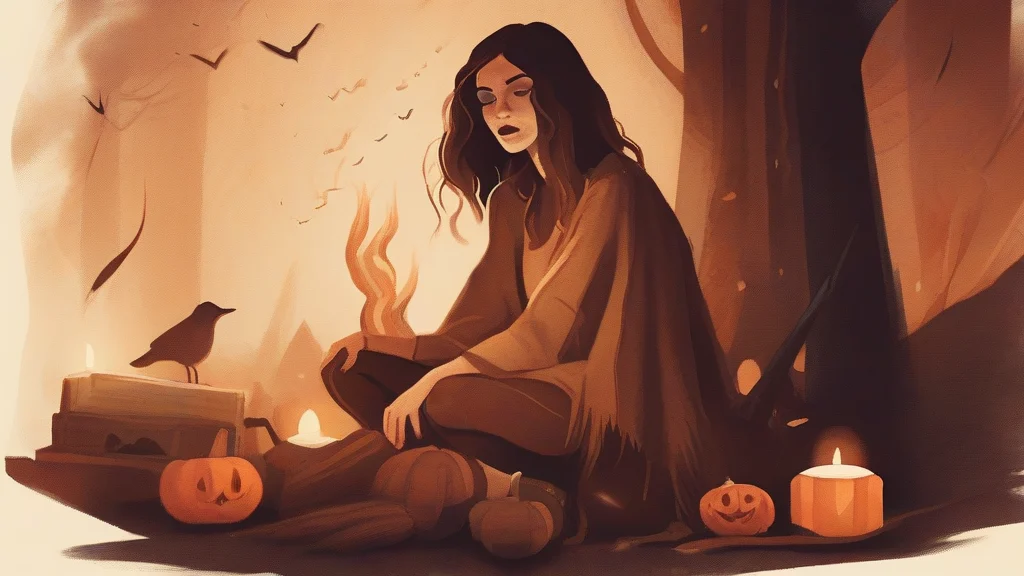
What does witchiest mean?
Witchiest is the informal superlative of witchy, meaning the most witch-like or the most strongly associated with witches or witchcraft. It is commonly used in humorous comparisons, as in “the witchiest village in England,” and can describe people, places, objects, fictional characters, or atmospheres that seem eerie, eccentric, dark, or occult. Because witchy itself often draws on cultural stereotypes of witches, witchiest may be teasing or affectionate among friends but insulting or sexist when directed unkindly at a woman. The word is more characteristic of speech and informal writing than of formal prose. Its superlative ending, -iest, makes it useful for playful emphatic comparisons, especially when a speaker wants to identify something as the clearest or most conspicuous example of a witch-like quality.
adjectiveThe most witch-like; having the greatest degree of qualities associated with witches or witchcraft. The word is chiefly informal and often humorous.
- The most witch-like or most strongly associated with witches, witchcraft, or traditionally witch-like qualities.
"Of all the characters in the film, Madame Zara was the witchiest by a considerable margin."
"Of all the characters in the film, Madame Zara was the witchiest by a considerable margin."
"The village was witchiest at midnight, when the old lanterns came on."
From Old English wicce to the playful superlative “witchiest,” the word carries centuries of folklore into a single comparison.
Reviewed by Deb Chak, Editor. AI-assisted content curated by RJS Tech Solutions LLP.
Etymology of witchiest
The underlying noun witch descends from Old English wicce, meaning a female sorcerer or witch. The modern adjective witchy was formed in English from witch and the suffix -y in the nineteenth century, while witchiest is its regular superlative formed with -est. English derivatives such as witchcraft, witchery, and bewitch preserve the same older Germanic root.
Related word forms
How witchiest is actually used
Chiefly informal and often playful, but potentially derogatory when it alludes to a woman's appearance or personality and invokes traditional stereotypes of witches. It normally follows a definite article or another determiner, as in “the witchiest.”
Easily confused with witchiest
Witchy is the base adjective, while witchiest is its superlative and therefore means the most witch-like.