
What does wolf mean?
Wolf most commonly denotes a large, wild member of the dog family, an animal recognized for its strength, intelligence, social organization, and howling. The word also has figurative uses for fierce or dangerous people and for people who deliberately remain apart from a group, as in lone wolf. In its older hunting sense, wolf is a verb meaning to hunt wolves; in modern informal English, it also means to eat food ravenously, especially in the phrase wolf down. These meanings have helped the word acquire both literal and symbolic force: a wolf can suggest a powerful predator, a threatening outsider, or someone who acts with uncontrolled appetite. The expression wolf in sheep's clothing uses the animal's association with deception to describe someone whose outward appearance conceals hostile intentions. Wolf is therefore both a precise name for a familiar animal and a versatile metaphor for predation, danger, isolation, and greed.
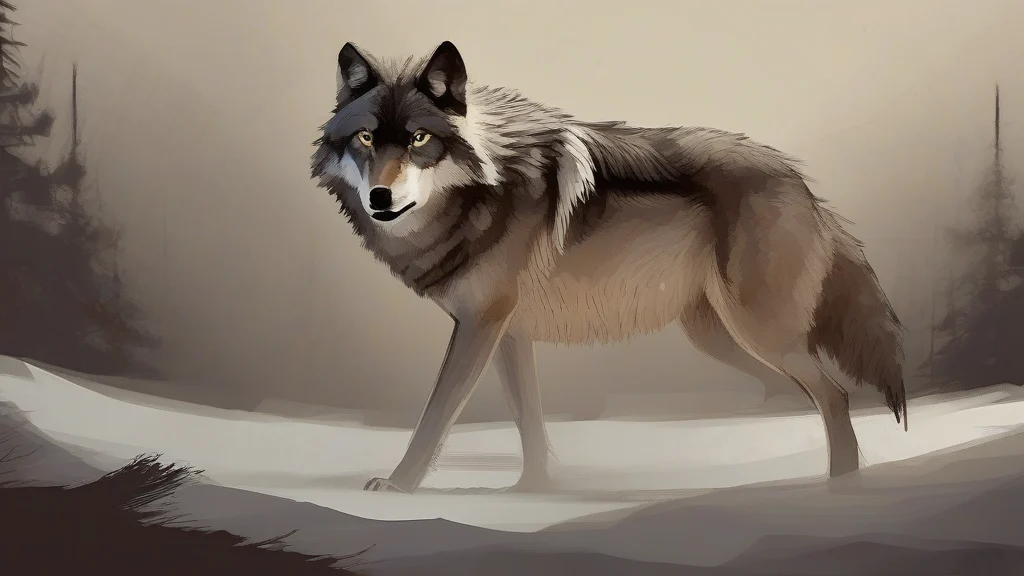
A large, wild canid, especially the gray wolf, typically living in a social group and hunting cooperatively. Figuratively, the word can refer to a fierce or dangerous person, or to someone who stands apart from others.
"The pack of wolves crossed the open valley before dawn."
Figurative senses are often negative and can describe someone as predatory, threatening, or deliberately solitary.
To hunt wolves, or to eat food greedily or ravenously, especially in the phrase wolf down.
"The hikers wolfed down their sandwiches while the storm approached."
The eating sense is informal. The hunting sense is less common in everyday usage but remains established.
The standard plural of wolf is wolves, with the vowel changing from /ʊ/ to /oʊ/ in American English and /u/ in many British accents.
"Wolves were heard calling in the hills."
The word wolf links Old English wulf with relatives such as German Wolf and the Latin lupus, a linguistic family that spans much of Europe.
Reviewed by Deb Chak, Editor. AI-assisted content curated by RJS Tech Solutions LLP.
Where does wolf come from?
The English word descends from Old English wulf, a form related to Proto-Germanic *wulfaz. Its relatives include German Wolf, Dutch wolf, and other Germanic forms, while the related Latin lupus and Greek lykos are generally traced to the same Indo-European root. The English noun developed its established animal meaning in early Middle English, and the verb meaning to hunt wolves is also recorded from the Middle English period.
Related word forms
How wolf is actually used
The noun is standard in British and American English. The verb meaning to eat greedily is informal and is especially common in the phrase wolf down. Figurative uses of the noun can be derogatory, particularly when describing a person as predatory, dangerous, or savage.