What does chitling mean?
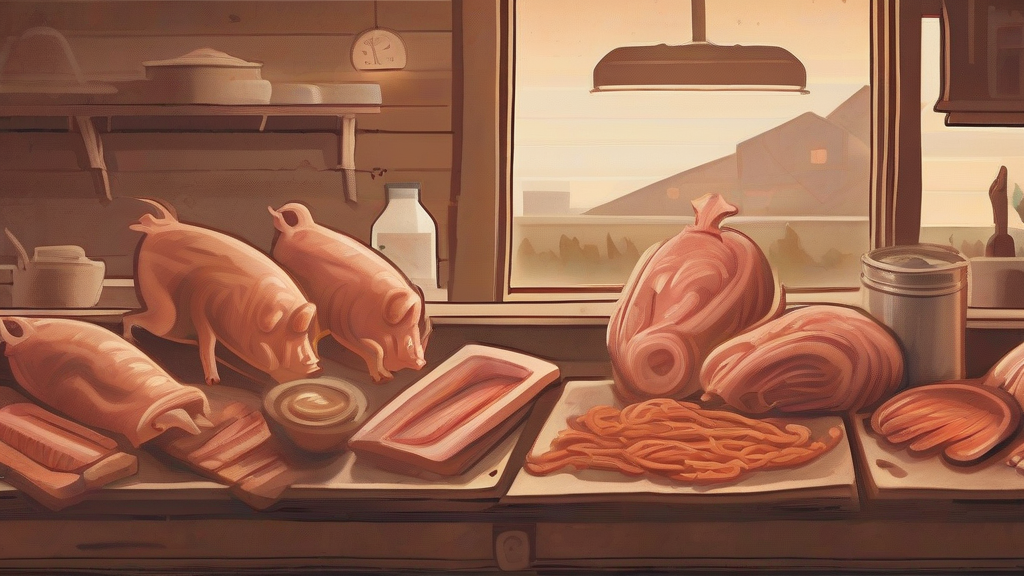
Chitling is a noun with two principal meanings. Its dominant modern sense refers to the small intestine of a pig, cleaned and cooked as food — a variant spelling of the more standard 'chitterling', usually encountered in the plural form 'chitlings'. This sense carries strong culinary associations with traditional rural British cooking and, especially in America, with Southern soul food, where chitlings are slow-simmered, often with onions and seasonings. The word's second, now largely historical sense denotes a small or insignificant child or creature, built on the older noun 'chit', which itself means both a young shoot and a small person. Because of its food-related associations, the word can sound rustic or unrefined, and it rarely appears in formal writing outside culinary or historical contexts. For readers, 'chitling' is worth knowing chiefly as a variant of 'chitterling' and as a small linguistic window into centuries-old peasant cookery.
The small intestine of a pig, especially when cleaned and cooked as food; a variant of chitterling.
"The festival menu featured fried chitlings with hot sauce."
Almost always used in the plural; the singular is rare in practice.
Archaic or dialectal: a small or insignificant child, animal, or thing.
"The farmer scooped up the stray chitling and carried it back to the barn."
This sense is obsolete or confined to dialect.
The plural 'chitlings' is by far the most common form in actual use, particularly in reference to the food.
"She spent the morning cleaning the chitlings for Sunday dinner."
Before haggis and hot dogs, there were chitlings — humble pig intestines that fed peasants for centuries and still anchor soul food kitchens across the American South.
Reviewed by Deb Chak, Editor. AI-assisted content curated by RJS Tech Solutions LLP.
Etymology of chitling
Chitling derives from Middle English, arising as a variant of 'chitterling' (also spelled chitlin, chitlins), a word whose earliest forms appear in medieval English texts and whose ultimate origin is uncertain, though it has long been linked to 'chit' and related Germanic diminutive elements suggesting something tiny. The food sense referred to hog intestines from at least the late Middle Ages. The extended sense of a small child or insignificant thing developed from the same root as 'chit', making 'chit' itself the clearest English relative of the word.
Related word forms
How chitling is actually used
In modern usage 'chitling' almost always appears as a variant of 'chitterling', typically in the plural ('chitlings'), and is strongly associated with Southern US and traditional British cooking. The singular is rare. The older sense meaning a small child or creature is archaic or dialectal.
Easily confused with chitling
Chitterling is the standard spelling for pig intestines eaten as food, while chitling is a less common variant of that same word.
A chit is a small child, young shoot, or a note recording a debt, whereas a chitling is either the intestine-based food or a diminutive extension referring to something small.