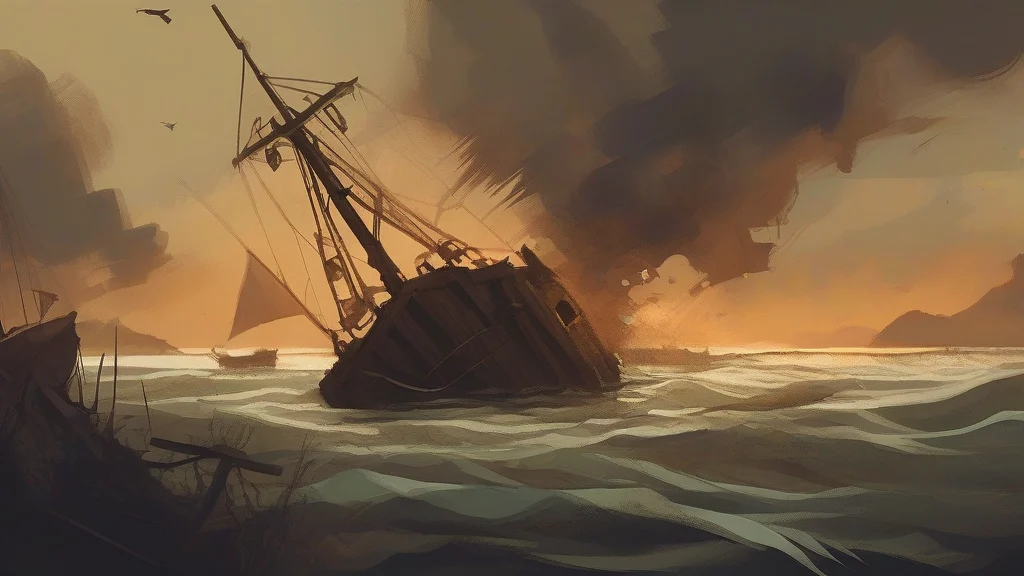
What does flotsam mean?
Flotsam refers to the floating debris of a shipwreck — cargo, timbers, and wreckage left drifting on the surface of the sea. In maritime tradition it was distinguished from jetsam, which described goods deliberately cast overboard to lighten a vessel. Over time, however, the two terms have merged in popular usage into the fixed phrase 'flotsam and jetsam,' meaning an assortment of useless or discarded odds and ends. Figuratively, flotsam now describes anything scattered, drifting, or regarded as worthless — from the litter left behind at a festival to people portrayed as cast aside by society. The word lends writing a vivid, slightly literary flavor, evoking images of storm-tossed seas and abandoned things. It derives from Anglo-French floteson, rooted in words for floating, and remains a useful term wherever writers want to suggest randomness, abandonment, and drift.
nounFloating debris or wreckage of a ship, especially that which is left adrift after a wreck; by extension, worthless or disorganized odds and ends.
- Floating debris or wreckage from a ship, especially after a wreck.
- (Figurative) Miscellaneous worthless items, people, or things regarded as scattered remnants or detritus.
"After the storm, the beach was strewn with the flotsam of a dozen wrecked fishing boats."
"Rescue teams combed the bay for days, finding little but flotsam from the sunken trawler."
"The alley was littered with the flotsam and jetsam of city life — broken umbrellas, torn posters, and abandoned shopping trolleys."
Flotsam is normally treated as an uncountable noun and has no standard plural form; quantity is expressed through phrases like 'pieces of flotsam.'
"Pieces of flotsam drifted past the harbor wall all morning."
In strict old maritime law, flotsam was the stuff that floated away by accident, while jetsam was thrown overboard on purpose — so the two words were legally distinct long before they became inseparable companions in everyday speech.
Reviewed by Deb Chak, Editor. AI-assisted content curated by RJS Tech Solutions LLP.
Etymology of flotsam
Flotsam comes from Anglo-French floteson (also spelled flotsoun), derived from Old French flotaison, meaning 'an act of floating,' itself formed from floter, 'to float,' a word of Germanic origin related to English float. The word entered English in the early seventeenth century as a legal term in maritime contexts. Its companion word jetsam arose from jettison, the act of throwing goods overboard, and the two have been paired since at least the nineteenth century.
How flotsam is actually used
The word carries a slightly literary or journalistic tone when used figuratively, often with a faintly dismissive connotation when describing people or objects as mere 'flotsam.' In modern usage it rarely appears without 'and jetsam' in figurative contexts.
Easily confused with flotsam
Jetsam is cargo deliberately thrown overboard to lighten a ship, while flotsam is debris floating unintentionally on the water after a wreck.