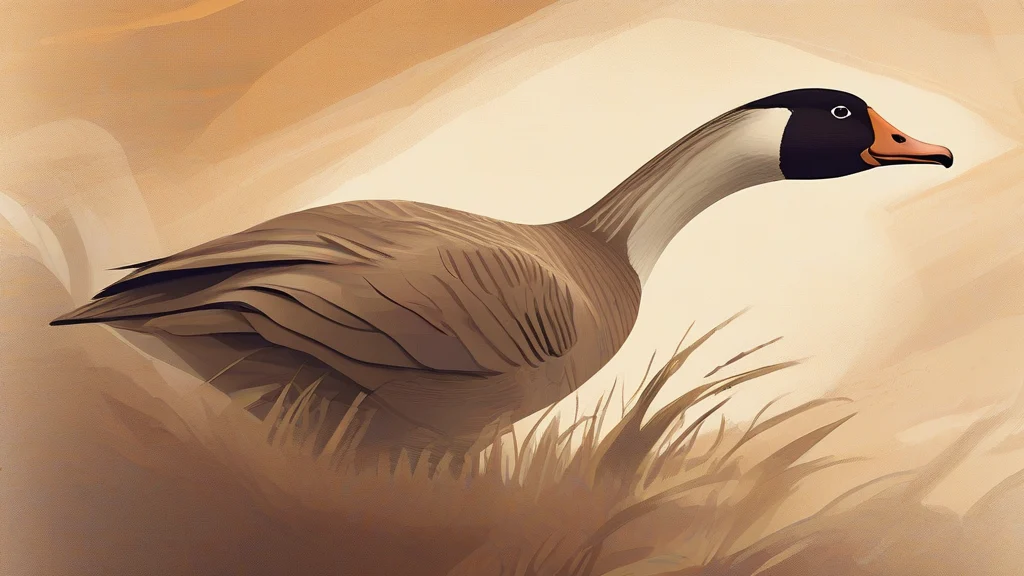
What does gander mean?
A gander is a male goose — the counterpart to the female, which is simply called a goose. The word belongs to everyday farmyard vocabulary but has taken on a lively second life in idiomatic English: in both Britain and America, people say 'take a gander' or 'have a gander' to mean taking a quick look at something. The expression is informal and friendly, giving the word a casual, approachable flavor despite its humble origins. Literally, ganders are known for being territorial and noisy, often serving as watchdogs around farms, which has given them a reputation for vigilance. The word traces back through Old English to ancient Germanic roots shared with 'goose' itself, making it one of the older animal names in the language. Whether you encounter it describing a bird or inviting you to glance at something new, 'gander' adds a touch of rustic charm to ordinary conversation.
A male goose.
"A noisy gander waddled across the farmyard, hissing at strangers."
Used literally for the male of the species; the female is simply called a goose.
Informally, in the phrases 'take a gander' or 'have a gander,' a quick look or glance.
"Before you buy it, take a gander at the fine print."
Informal register; 'take a gander' is chiefly American, while 'have a gander' is more common in Britain.
Standard regular plural; used when referring to multiple male geese.
"The pond was crowded with ganders squabbling over bread crumbs."
When someone says they'll 'take a gander,' they're borrowing a male goose's name just to mean a quick look — and nobody's quite sure how that happened.
Reviewed by Deb Chak, Editor. AI-assisted content curated by RJS Tech Solutions LLP.
Etymology of gander
Gander comes from Old English 'gandra,' the traditional name for a male goose, and shares its deep origins with 'goose' in the Proto-Germanic word for the bird, ultimately traceable to the same ancient Indo-European root that gave rise to related words across Germanic languages. The idiom 'take a gander,' meaning to take a look, developed later in colloquial American English, though the exact reason a male goose's name became shorthand for looking remains uncertain.
Related word forms
How gander is actually used
'Take a gander' is informal and chiefly American; British speakers more often say 'have a gander.' The literal sense refers strictly to a male goose, so it carries no negative connotation, though calling someone a 'silly goose' plays on the bird's reputation rather than on this word specifically.
Easily confused with gander
A gander is specifically a male goose, while 'goose' refers to the bird generally or to a female.