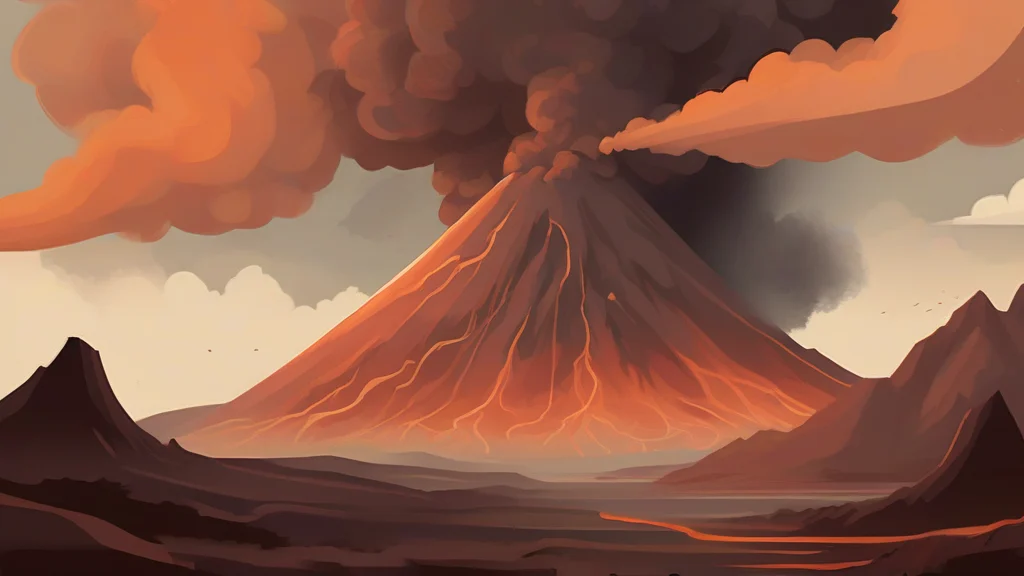
What does volcanicity mean?
Volcanicity refers to the state or quality of being volcanic, characterized by the presence or activity of volcanoes in a region. This term is often used in geology and earth sciences to describe areas with high volcanic activity, such as island arcs or rift zones. Volcanicity can manifest in various forms, including volcanic eruptions, earthquakes, and the formation of volcanic landforms. Understanding volcanicity is crucial for mitigating the risks associated with volcanic hazards and for studying the Earth's geological processes. The concept of volcanicity helps scientists to better comprehend the Earth's internal dynamics and the processes that shape our planet's surface.
nounThe state or quality of being volcanic; the presence or activity of volcanoes in a region.
- The quality of being volcanic
- The presence or activity of volcanoes
"The volcanicity of the island made it a popular destination for geologists."
"The volcanicity of the region was evident in its numerous volcanic peaks."
"The island's volcanicity made it prone to earthquakes and eruptions."
Reviewed by Deb Chak, Editor. AI-assisted content curated by RJS Tech Solutions LLP.
Etymology of volcanicity
The term volcanicity originates from the Latin word 'volcanus,' meaning volcano, and the suffix '-icity,' which forms nouns indicating a quality or state. The word has its roots in the study of volcanoes and volcanic activity, dating back to the 17th century. Etymologically related words include volcano, volcanic, and volcanize.
How volcanicity is actually used
Formal or scientific contexts; often used in geology, geography, or earth sciences.