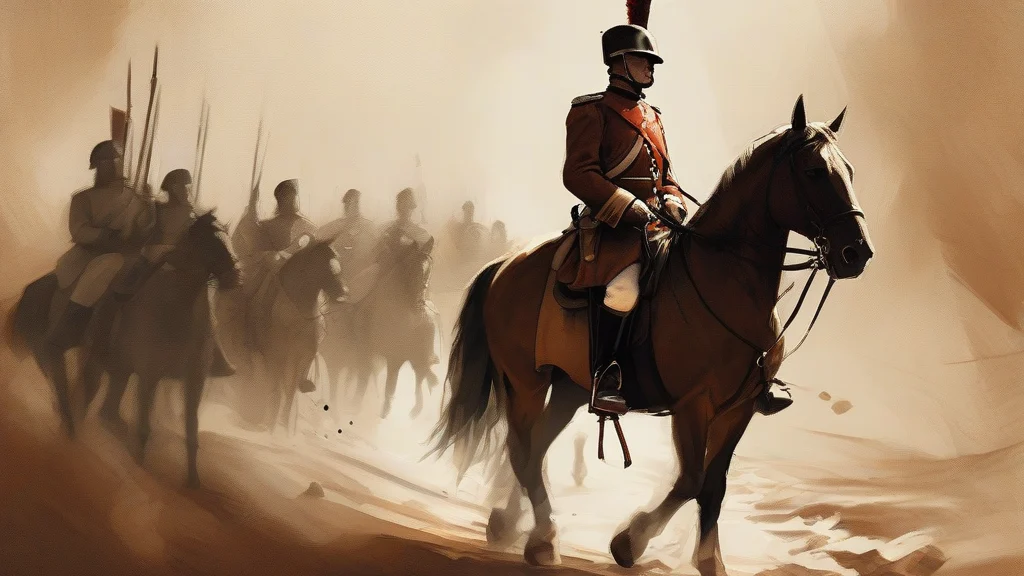
What does carabinier mean?
A carabinier is a soldier armed with a carbine, the short-barreled musket favored by cavalry and other troops who needed a firearm lighter than the standard infantry weapon. The term is chiefly historical, evoking the mounted soldiers of seventeenth- to nineteenth-century European armies: France, Britain, Sardinia, and other states all maintained elite regiments formally titled carabiniers, often dressed in distinctive uniforms and regarded as crack troops. In everyday modern usage the word survives mostly in military history books, museum displays, and wargaming contexts, where it carries a connotation of disciplined, old-world soldiery. It is closely related to the variant form 'carbineer', which means the same thing and is somewhat more familiar to modern readers. Care should be taken not to confuse it with 'carabiner', the spring-loaded metal clip used by climbers, though both words trace back through French 'carabine', meaning carbine. For anyone reading accounts of Napoleon's cavalry or the wars of the eighteenth century, 'carabinier' is a word worth recognizing.
nounA soldier armed with a carbine, typically a light cavalryman or member of a rifle regiment; historically, a member of certain European cavalry regiments so designated.
- A soldier armed with a carbine, especially a member of a cavalry unit or elite regiment equipped with that firearm.
- Specifically, a member of certain historical European heavy-cavalry or guard regiments styled 'carabiniers' (e.g. in France, Britain, and Italy).
"The carabinier wheeled his horse about, carbine at the ready."
"A carabinier of the Imperial Guard sat motionless at the edge of the parade ground."
"The museum's uniform belonged to a carabinier who had served in the Italian cavalry."
Standard plural; capitalized when referring to a specific regiment, e.g. the 6th Dragoon Guards were once styled the Carabiniers.
"Two squadrons of carabiniers formed up behind the ridge."
The climbing 'carabiner' on your backpack and the Napoleonic 'carabinier' on horseback come from the same French word for a musket — one became hardware, the other a horseman.
Reviewed by Deb Chak, Editor. AI-assisted content curated by RJS Tech Solutions LLP.
Etymology of carabinier
Carabinier derives from 'carbine', the short-barreled firearm, which entered English from French 'carabine'. The French term itself is of uncertain deeper origin, but was well established by the sixteenth century as European armies adopted the weapon for cavalry use. Soldiers who carried the carbine naturally became known as carabiniers (or, in an anglicized variant still current, 'carbineers'), and several European nations organized whole elite regiments under that name. Its modern cousin 'carabiner', borrowed via German from the same French source, preserves the family resemblance in a very different domain.
Related word forms
How carabinier is actually used
Largely historical and military-historical in register today; the word appears mainly in accounts of Napoleonic-era armies and regimental histories. The variant spelling 'carbineer' is equally acceptable and somewhat more common in modern English. Not to be confused with 'carabiner', the modern climbing hardware term.
Easily confused with carabinier
A carabiner is the metal clip used in climbing and rigging, while a carabinier is a soldier armed with a carbine — the two share an etymological thread but mean entirely different things.