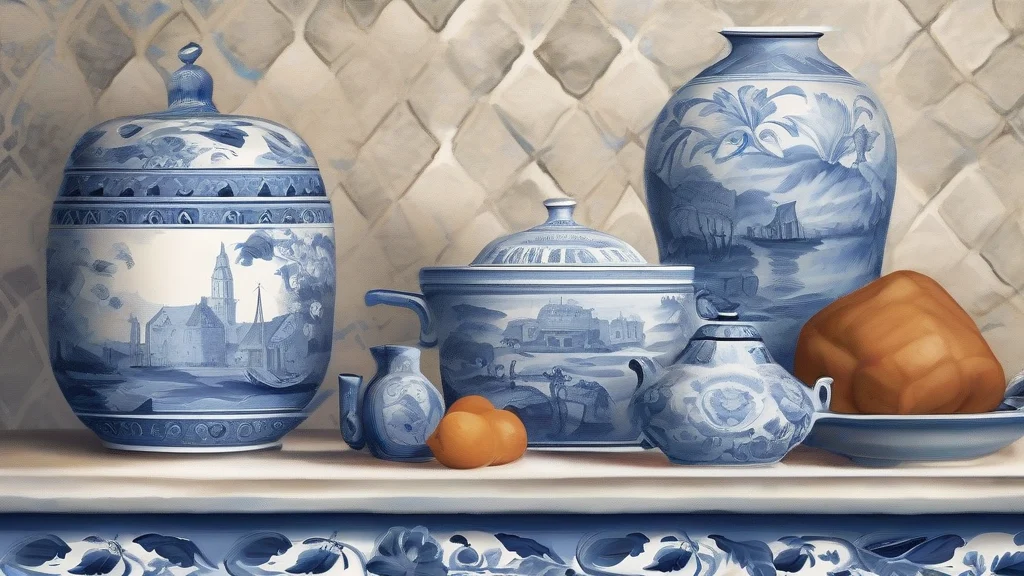
What does delftware mean?
Delftware is a distinctive type of tin-glazed earthenware pottery characterized most famously by its blue-and-white decoration, first produced in large quantities in the city of Delft in the Netherlands during the seventeenth century. Inspired by imported Chinese porcelain, which European potters could not yet replicate technically, Delft potters developed their own style using an opaque white tin glaze over which designs were painted in cobalt blue before firing. Typical motifs included flowers, windmills, ships, biblical scenes, and landscapes. The word is used both for genuine pieces made in Delft and more broadly for pottery in that style made elsewhere, including England. Today, delftware is prized by collectors, displayed in museums, and still manufactured in the Netherlands, with Royal Delft (De Porceleyne Fles) continuing the tradition.
nounDelftware is a style of tin-glazed earthenware pottery, typically painted in blue and white, originally made in Delft in the Netherlands and later widely imitated elsewhere.
- Tin-glazed earthenware pottery, usually decorated in blue on white, made in or in the style of that produced at Delft, Netherlands, especially from the 17th century onward.
"The mantelpiece was lined with delftware tiles depicting windmills and sailing ships."
"A collection of antique delftware plates hung along the staircase wall."
"She admired the delftware vases in the Rijksmuseum's Dutch ceramics gallery."
Rarely pluralized; the word is normally used as a mass noun. A plural form occasionally appears in museum or trade contexts to refer to individual items or types.
"The exhibition brought together delftwares from collections across northern Europe."
The blue-and-white 'Delft' style was actually a Dutch attempt to imitate prized Chinese porcelain — an imitation so successful it became iconic in its own right.
Reviewed by Deb Chak, Editor. AI-assisted content curated by RJS Tech Solutions LLP.
Etymology of delftware
Delftware takes its name from the city of Delft in the Netherlands, where the tin-glazed pottery industry flourished from the early seventeenth century onward, replacing earlier centers such as Antwerp. The English word combines the place name with "ware," a long-established term for manufactured goods. It emerged in English usage in the nineteenth century as collecting interest grew, though the pottery itself dates to the 1600s. Related terms such as faience and majolica describe comparable tin-glazed traditions elsewhere in Europe.
How delftware is actually used
Often capitalized as "Delftware" when referring specifically to products of the Delft potteries; lowercased when referring generically to the style. The word is nearly always used as an uncountable mass noun.
Easily confused with delftware
Delft is the Dutch city where the pottery originated, while delftware is the pottery itself.