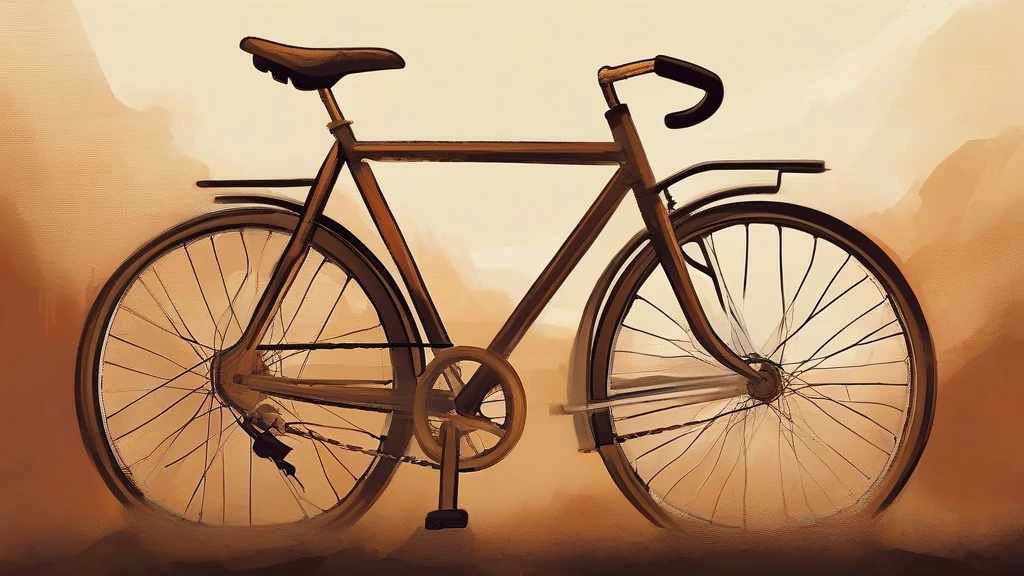
What does freewheel mean?
A freewheel is a mechanical device—most familiar from bicycles—that permits a wheel to spin forward independently of the mechanism that normally drives it, so that the rider can stop pedalling while the bike keeps rolling. In engineering terms it is usually a ratchet-and-pawl assembly fitted to the rear hub, and its operation explains the soft clicking a bicycle makes during a descent. The word also functions as a verb: to freewheel is to coast without power, letting momentum carry a car, bicycle, or even oneself forward. Used figuratively, freewheeling describes living or acting in an unplanned, unrestrained way, and this sense has given English the widely used adjective 'freewheeling'. The word combines precise technical meaning with vivid metaphorical force, making it useful both for discussing mechanics and for characterising a carefree approach to life.
A ratchet device, especially on a bicycle's rear wheel, that allows the wheel to continue rotating forward when the pedals are not being turned.
"He stripped down the rear hub to service the freewheel before the race."
Commonly used by cyclists and bicycle mechanics; on many modern bikes the equivalent unit is built into a 'freehub' cassette body.
To coast in a vehicle with the drive disengaged, or figuratively to proceed in an effortless, unrestrained way.
"The car freewheeled silently down the hill with the engine switched off."
Standard pluralisation applies only to the noun sense, referring to multiple mechanical units.
"The workshop stocks freewheels in several thread sizes."
That clicking sound your bike makes when you stop pedalling downhill? That's the freewheel letting you rest while gravity does the work.
Reviewed by Deb Chak, Editor. AI-assisted content curated by RJS Tech Solutions LLP.
Etymology of freewheel
Freewheel is a compound of the English words 'free' and 'wheel', coined to name the mechanical device that lets a wheel turn freely of its drive. The element 'free' descends from Old English 'frēo', rooted in the Germanic word for beloved or unrestricted, which also yields 'freedom' and related terms such as 'frank'. The device itself emerged with late nineteenth- and early twentieth-century cycling and motoring technology, and the figurative sense of coasting through life followed naturally from the mechanical one.
Related word forms
How freewheel is actually used
The mechanical sense is technical and common among cyclists and engineers; the verb form appears both in literal motoring contexts and, more loosely, in figurative speech about carefree behaviour. The figurative use carries a mildly positive, easygoing connotation, though it can suggest a lack of discipline depending on tone. The derived term 'freewheeling' is more common than the bare verb for describing personality or lifestyle.
Easily confused with freewheel
Freewheel is the noun or verb itself, while freewheeling is its derived adjective describing an unrestrained, carefree manner of behaving.