
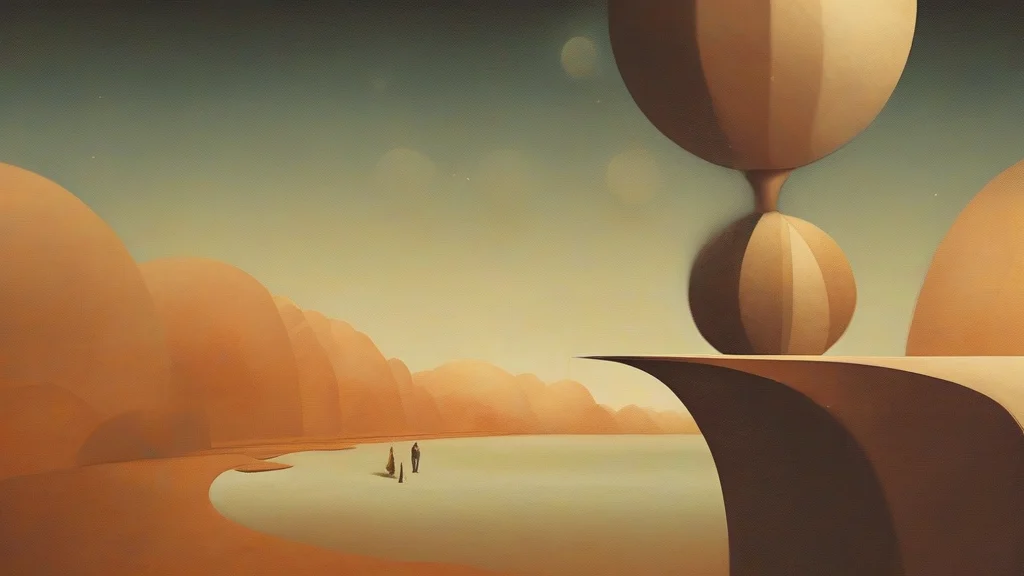
What does surrealist mean?
Surrealist has two main roles. As an adjective, it describes something associated with surrealism or having its characteristic dreamlike, bizarre, and seemingly irrational quality. As a noun, it refers to an artist, writer, filmmaker, or other creative participant in the Surrealist movement. The word is often used for imagery that unsettles ordinary expectations, combines unrelated objects, or creates the atmosphere of a dream. It can also carry a broader cultural meaning: a surrealist world is one in which familiar reality has been distorted into something strange but visually memorable. In art criticism and cultural discussion, the adjective may imply an intentional exploration of the unconscious, fantasy, and irrational association. In everyday description, however, it can simply mean extraordinarily weird or unreal. The more common derived adjective surrealistic is frequently preferred when the speaker wants to evoke the style of surrealism without implying formal membership in the movement.
Relating to or characteristic of surrealism; dreamlike, bizarre, strange, or seemingly irrational.
"The surrealist images in the film make the city seem like a half-remembered dream."
Often used in artistic, literary, cinematic, and design criticism, but also common in everyday descriptions of something extremely strange.
An artist, writer, filmmaker, or other participant associated with the Surrealist movement or its artistic methods.
"The surrealist drew improbable creatures and unsettling transformations of everyday objects."
Often capitalized when referring specifically to a historical member of the organized Surrealist movement.
The standard plural of the noun, used for multiple artists or participants associated with surrealism.
"The exhibition brought together surrealists from several European countries."
The Surrealists turned the uncanny logic of dreams into an artistic program: reality needed to be loosened, not merely polished.
Reviewed by Deb Chak, Editor. AI-assisted content curated by RJS Tech Solutions LLP.
Where does surrealist come from?
Surrealist comes from French surrealiste, formed from surrealisme, a term closely associated with the French poet and critic André Breton and the Surrealist movement that emerged in the 1920s. The underlying French adjective surreal means “superreal” or “beyond real,” suggesting an effort to reach a reality regarded as more truthful than ordinary conscious experience. Related English words include surreal, surrealism, and surrealistic.
Related word forms
How surrealist is actually used
The term is neutral to formal and is especially common in discussions of art, literature, film, and visual design. For describing something merely strange or dreamlike, surrealistic is often more idiomatic, while surrealist can suggest a direct connection with the historical movement.
Easily confused with surrealist
Surrealist can name a member of the Surrealist movement or directly characterize its style, whereas surrealistic is an adjective describing something that evokes surrealism.