
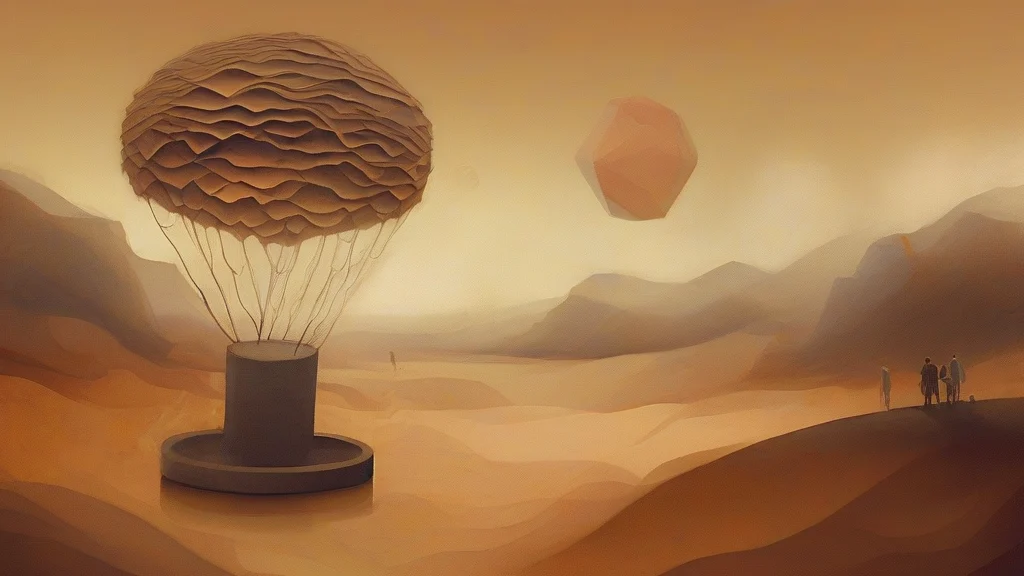
What does surrealistic mean?
Surrealistic describes something that seems dreamlike, irrational, or fantastically strange, particularly when it evokes the artistic movement known as Surrealism. The word is often used for images, landscapes, narratives, films, or ideas that depart sharply from ordinary reality. It does not necessarily mean merely unrealistic: a surrealistic work typically combines recognizable elements in unexpected ways, creating an atmosphere that feels dreamlike, uncanny, or psychologically unsettling. In art criticism, surrealistic can identify works influenced by Surrealism, whose artists sought to explore the unconscious mind and challenge conventional ideas of reality. In everyday use, it can also describe any scene or experience that seems so strange that it might come from a dream. The related adverb surrealistically is used to describe the manner in which such effects or qualities are produced.
adjectiveCharacterized by dreamlike, irrational, or fantastically strange imagery or ideas, especially in the manner of Surrealism.
- Having the dreamlike, irrational, or fantastically strange qualities associated with Surrealism.
- So strange or unrealistic as to resemble a dream.
"The film presents a surrealistic world in which ordinary rooms shift and rearrange themselves without explanation."
"Her surrealistic paintings combine city streets with desert landscapes and impossible shadows."
"The novel creates a surrealistic atmosphere in which time moves backward and conversations repeat themselves."
Surrealistic art turns the ordinary world inside out, making the impossible seem disturbingly familiar.
Reviewed by Deb Chak, Editor. AI-assisted content curated by RJS Tech Solutions LLP.
Where does surrealistic come from?
The word comes from Surrealism, an early 20th-century artistic and literary movement that sought to release the unconscious mind and challenge conventional ideas of reality. Surrealism was formed through French, combining sur-, meaning over or beyond, with réal, meaning real. Its associated terms include surreal, surrealism, and surrealist; the adjective surrealistic developed from this vocabulary.
Related word forms
How surrealistic is actually used
Surrealistic is especially common in discussions of art, literature, film, and imagination. It is generally more specific than dreamlike and may suggest the deliberate distortion and irrationality associated with Surrealism.
Easily confused with surrealistic
Surreal generally means unreal, strange, or dreamlike, whereas surrealistic more specifically describes imagery, ideas, or effects associated with the Surrealist movement.